Monthly Archives: March 2026

Providing Product Feedback and Content Improvement Suggestions to Microsoft

One of the most valuable parts of being engaged in the Microsoft community is the opportunity to share real-world feedback that helps improve products, content, and community experiences. My contribution is not limited to learning and sharing knowledge. I also actively provide feedback to Microsoft based on what I see from customers, partners, community members, architects, developers, and business leaders.

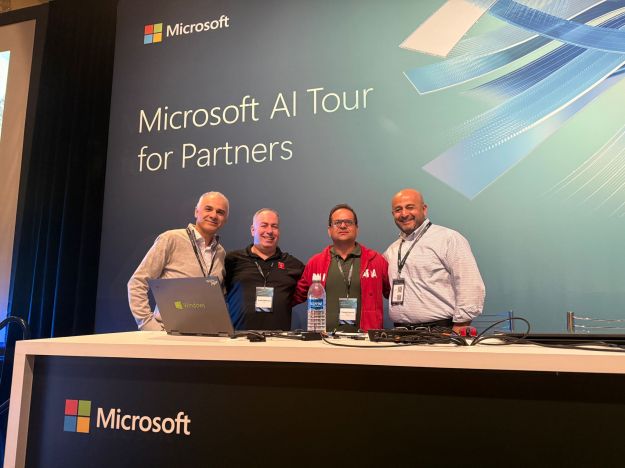
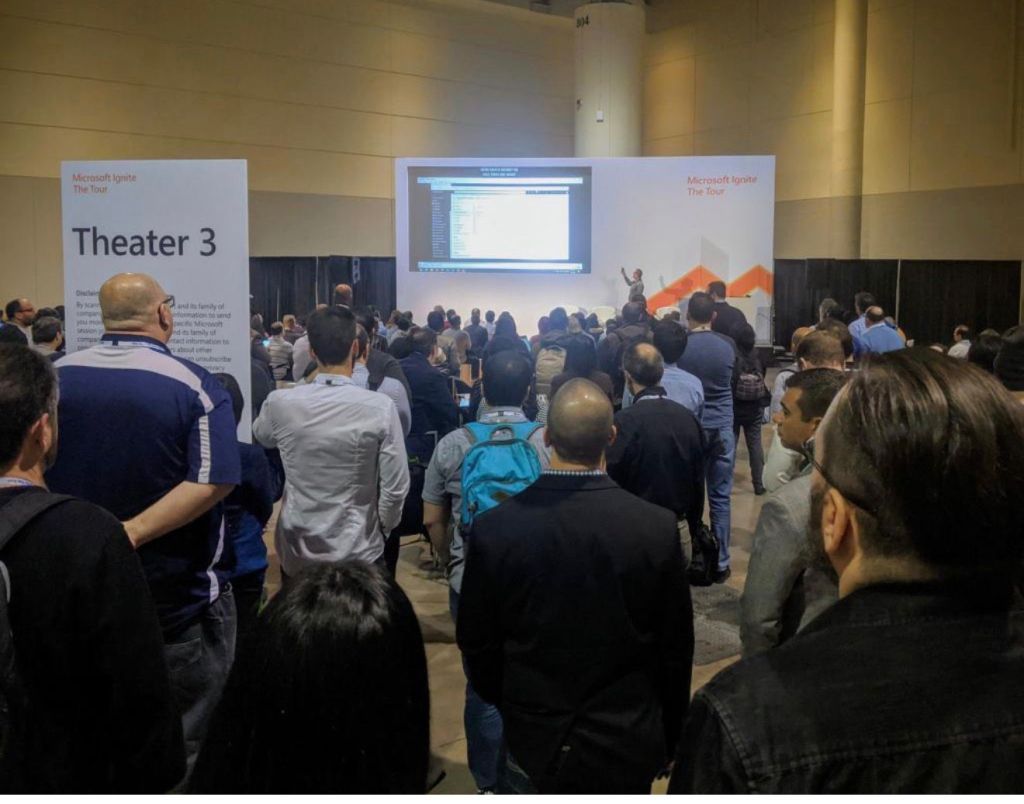
Over the years, I have provided product feedback and content improvement suggestions through several Microsoft community and partner engagement channels, including Microsoft Fabric conferences, MVP PGI Connects, and Microsoft AI Tour for Partners.

Feedback Through Microsoft Fabric Conferences

Microsoft Fabric is a major transformation in the data and analytics ecosystem. Through Fabric-related conferences and sessions, I have shared feedback on how customers and partners understand Fabric adoption, architecture, governance, data engineering, Power BI integration, security, migration patterns, and enterprise readiness.

My feedback often focuses on practical adoption challenges, such as:

  • How Fabric messaging can be made clearer for enterprise decision-makers
  • How architecture patterns can be explained more effectively for data teams
  • How governance, lineage, and security guidance can be strengthened
  • How content can better address real-world migration scenarios from legacy platforms
  • How partners can better position Fabric value to customers

This feedback is shaped by real conversations with organizations that are evaluating or adopting Microsoft Fabric. My goal is to help Microsoft improve how Fabric is explained, adopted, and implemented across different industries.

Feedback Through MVP PGI Connects

MVP PGI Connects provide an important platform for direct engagement between MVPs and Microsoft product groups. Through these sessions, I have shared technical feedback, adoption insights, and content improvement suggestions based on community needs and enterprise customer scenarios.

These conversations are valuable because MVPs bring field-level experience from the community. I use these opportunities to highlight what users are asking, where technical content may need more clarity, and what product guidance would help architects, developers, and business leaders make better decisions.

My feedback includes areas such as Azure AI, Microsoft Fabric, data architecture, responsible AI, enterprise governance, and solution design patterns.

Feedback Through Microsoft AI Tour for Partners

The Microsoft AI Tour for Partners has also been an important channel for sharing feedback on AI adoption, partner enablement, and content readiness. As AI becomes a priority for every organization, partners need clear, practical, and business-aligned guidance to help customers move from AI experimentation to production.

Through these engagements, I have provided feedback on:

  • How AI content can better connect technical capabilities with business outcomes
  • How partner enablement materials can be more practical and architecture-focused
  • How Azure AI and Azure AI Foundry messaging can be simplified for customers
  • How responsible AI, security, and governance should be emphasized early
  • How partners can be better equipped with real-world demos, use cases, and adoption playbooks

Why This Feedback Matters

Product feedback is powerful because it helps close the gap between product innovation and real-world adoption. Microsoft is building powerful platforms across Azure, Fabric, and AI, but the success of these technologies depends on how clearly they are understood, adopted, and implemented by customers and partners.

By sharing feedback from the field, I help amplify the voice of the community and bring practical insights back to Microsoft. This includes what is working well, what needs more clarity, and where additional content, demos, architecture guidance, or product improvements could create more value.

Final Thought

Yes, I have provided product feedback and content improvement suggestions to Microsoft through Fabric conferences, MVP PGI Connects, and Microsoft AI Tour for Partners. My feedback is grounded in real-world customer conversations, partner enablement needs, and community learning experiences.

For me, this is an important part of being a Microsoft community contributor. It allows me to not only share Microsoft innovation with the community, but also bring community insights back to Microsoft so products, content, and adoption guidance continue to improve.

Azure AI Democratization: Turning AI from a Specialist Capability into an Enterprise Growth Engine

For many organizations, the first chapter of AI adoption looked the same: a few isolated pilots, a handful of innovation teams, and a lot of excitement without a clear path to scale. The next chapter is different. It is not about whether AI works. It is about whether AI can be democratized across the enterprise in a way that is secure, governed, practical, and measurable.

That is where Azure AI Foundry becomes strategically important. Microsoft describes Foundry as a unified Azure platform for enterprise AI operations, model builders, and application development, bringing together agents, models, and tools with built-in tracing, monitoring, evaluations, and enterprise controls such as RBAC, networking, and policies. In executive terms, that means a single foundation for moving AI from experimentation to repeatable business value.

AI democratization does not mean letting every team run disconnected experiments. It means making AI accessible across functions, while preserving the guardrails leaders care about most: security, compliance, reliability, cost control, and trust. It is the difference between “some people are using AI” and “our company is building an AI operating model.” Microsoft’s own adoption guidance frames this journey in stages, from early pilots, to grounding AI with enterprise data, to building intelligent agents and workflows, and ultimately scaling with enterprise observability, governance, and production controls.

This matters because most executive teams are no longer asking for another proof of concept. They are asking tougher questions. How do we make AI usable across HR, operations, finance, service, and customer experience? How do we avoid fragmented tooling? How do we move quickly without creating unmanaged risk? How do we ensure AI is helping our workforce do better work, not simply creating more noise?

Azure AI Foundry answers those questions by giving organizations a common layer for model access, orchestration, evaluation, and governance. It supports a broad catalog of foundation models from Microsoft and third-party providers, and it offers serverless model access so teams can use leading models without provisioning and managing their own GPU infrastructure. That lowers the barrier to entry for business teams while still allowing IT and architecture leaders to maintain control over standards and deployment patterns.

The executive opportunity is clear: democratize access, centralize governance, and industrialize adoption.

Consider what that looks like in practice.

At AUDI AG, the need was not abstract innovation. It was a practical employee experience challenge: how to give workers faster access to answers without expanding support overhead. Using Azure AI Foundry and related Azure services, Audi deployed its first AI-powered assistant in just two weeks and then moved to scale the same framework across additional agents. The lesson for executives is powerful: when the platform foundation is ready, AI moves from months of setup to weeks of business delivery.

At Baringa, the challenge was knowledge work productivity. The firm used Azure AI Foundry and Azure OpenAI to build an internal generative AI platform that accelerated document drafting by 50 percent, with time savings of up to three days per document. This is a strong example of AI democratization because it takes a capability once reserved for technical specialists and embeds it directly into the daily workflow of consultants and delivery teams.

At Hughes, Azure AI Foundry was used to build 12 production applications, including automated sales call auditing and field service process support. Microsoft reports a 90 percent reduction in sales call audit costs and productivity gains of up to 25 percent. That is what democratization looks like when AI is not confined to a lab, but applied across frontline operations.

In healthcare, the story becomes even more compelling. healow manages more than 50 million patient communications for customers and used Azure OpenAI in Azure AI Foundry Models to power a secure, real-time contact center experience. For executives, the takeaway is not just automation. It is that AI can be democratized even in highly sensitive, regulated environments when security and compliance are designed into the platform from the start.

And in enterprise operations, NTT DATA has used the Microsoft AI ecosystem, including Azure AI Foundry, to launch agentic AI services with up to 65 percent automation in IT service desks and up to 100 percent automation in some order workflows. This shows where the conversation is heading next: from copilots that assist, to agents that execute.

So what should executives do now?

First, stop treating AI as a collection of isolated use cases. Start treating it as a capability layer for the business. The most successful organizations do not scale AI one department at a time with separate tools, policies, and vendors. They create a reusable platform and a clear adoption motion.

Second, begin with high-friction workflows where speed, consistency, and knowledge access matter. Internal assistants, service desks, document creation, customer service, compliance reviews, and knowledge search are often the right opening moves. These are areas where AI can deliver measurable value quickly while building organizational confidence. Microsoft’s adoption guidance explicitly points to early pilots, then grounding with enterprise data through retrieval-augmented generation, before expanding into more autonomous workflows and enterprise-wide scale.

Third, ground AI in enterprise context. Generic AI can impress in demos. Grounded AI creates business value. Microsoft’s Foundry adoption guidance highlights the move from early pilots to attaching enterprise knowledge, documents, and internal data so systems become more relevant, accurate, and useful for real work. This is the pivot from novelty to trust.

Fourth, govern from day one. Foundry’s responsible AI guidance emphasizes end-to-end security, observability, and governance with controls and checkpoints throughout the agent lifecycle. Executives should view this not as a brake on innovation, but as the reason innovation can scale safely. Democratization without governance creates shadow AI. Democratization with governance creates enterprise leverage.

Finally, measure success in business language. Not prompts written. Not pilots launched. Measure time saved, cycle time reduced, service quality improved, employee capacity unlocked, compliance strengthened, and revenue enabled. The organizations moving ahead are not simply adopting AI tools. They are redesigning how work gets done.

That is the real promise of Azure AI democratization.

It is not about making everyone a data scientist or an AI engineer. It is about making intelligence, automation, and decision support available across the enterprise in a controlled and scalable way. It is about giving every function access to the power of AI, without forcing every function to become an AI platform team.

Decoding Machine Learning: From Basics to Advanced Applications with Azure Foundry

Machine Learning is no longer a futuristic concept reserved for research labs. It has become a practical business capability that powers fraud detection, customer personalization, predictive maintenance, intelligent automation, recommendation engines, document intelligence, and generative AI applications. The challenge for most organizations is no longer whether Machine Learning can create value. The real challenge is how to build, deploy, govern, and scale Machine Learning solutions responsibly.

This is where Azure AI Foundry, now part of Microsoft Foundry, becomes a powerful platform for modern AI and Machine Learning delivery. Microsoft describes Foundry as a unified Azure platform-as-a-service offering for enterprise AI operations, model builders, and application development, allowing teams to focus on building AI solutions instead of managing infrastructure.

What Is Machine Learning?

At its core, Machine Learning is the ability for systems to learn patterns from data and make predictions, classifications, recommendations, or decisions without being explicitly programmed for every rule.

Traditional software follows fixed instructions:

Input + Rules = Output

Machine Learning works differently:

Input + Output Examples = Learned Model

For example, instead of manually writing every rule to detect a fraudulent transaction, a Machine Learning model can learn from historical transaction patterns and identify suspicious behavior based on probability, signals, and anomalies.

The Main Types of Machine Learning

1. Supervised Learning

Supervised Learning uses historical data where the correct answer is already known. The model learns from examples.

Common use cases include:

Customer churn predictionLoan default predictionSales forecastingMedical diagnosis supportFraud detection

For example, a bank can train a model using past customer data to predict which customers are likely to leave.

2. Unsupervised Learning

Unsupervised Learning finds hidden patterns in data without predefined labels.

Common use cases include:

Customer segmentationAnomaly detectionMarket basket analysisBehavior clusteringPattern discovery

For example, a retailer can group customers based on buying behavior without manually defining the customer groups upfront.

3. Reinforcement Learning

Reinforcement Learning trains systems to make decisions by rewarding good outcomes and penalizing poor ones.

Common use cases include:

RoboticsAutonomous systemsDynamic pricingGame AIOptimization problems

This approach is powerful when the system needs to learn through trial, feedback, and continuous improvement.

4. Generative AI and Foundation Models

Generative AI extends Machine Learning by creating new content, such as text, images, code, summaries, recommendations, and agent-driven workflows. Azure AI Foundry supports this modern development pattern by providing access to models, tools, agents, and safeguards for building AI applications at scale.

Why Azure Foundry Matters for Machine Learning

Machine Learning projects often fail not because the model is weak, but because the enterprise architecture around the model is incomplete. Teams struggle with data access, model deployment, monitoring, governance, security, cost control, and production reliability.

Azure AI Foundry helps address these challenges by bringing together the key components needed to move from experimentation to production. Microsoft’s Foundry architecture organizes AI workloads through a top-level Foundry resource for governance, projects for development isolation, and connected Azure services for storage, search, and secrets management.

In simple terms, Azure Foundry acts as the enterprise AI factory.

It helps teams:

Discover modelsBuild AI applicationsCreate and manage agentsConnect enterprise dataEvaluate quality and safetyDeploy solutionsMonitor performanceApply governance

Azure Foundry Architecture for Machine Learning

A strong Machine Learning architecture is not just about the model. It includes data, pipelines, compute, APIs, applications, governance, monitoring, and feedback loops.

A practical Azure Foundry architecture can be viewed in seven layers:

1. Business Experience Layer Web apps, mobile apps, Teams, Copilot experiences, APIs2. AI Application Layer AI apps, chat interfaces, copilots, intelligent workflows3. Foundry Project Layer Models, prompts, agents, tools, evaluations, deployment assets4. Model Layer Azure OpenAI models, open models, custom ML models, foundation models5. Data and Knowledge Layer Azure AI Search, Microsoft Fabric, Azure Data Lake, SQL, Databricks, APIs6. Governance and Security Layer Microsoft Entra ID, Key Vault, private networking, policies, monitoring7. Operations Layer Evaluation, observability, cost tracking, feedback, retraining

This layered model allows organizations to build Machine Learning and AI solutions that are scalable, secure, repeatable, and production-ready.

Model Selection: Choosing the Right Intelligence

One of the most important architecture decisions is selecting the right model for the right use case. The most advanced model is not always the best model. Some workloads need low latency. Some need lower cost. Some need stronger reasoning. Some need domain-specific accuracy.

The Foundry model catalog helps teams discover and use a wide range of models from providers such as Azure OpenAI, Mistral, Meta, Cohere, NVIDIA, Hugging Face, and Microsoft-trained models. It also provides model comparison capabilities, benchmarks, and deployment options.

A simple model selection framework looks like this:

Use Case Recommended Model StrategySimple FAQ chatbot Smaller language model with retrievalEnterprise knowledge search Large language model plus Azure AI SearchFraud detection Custom supervised ML modelCustomer segmentation Unsupervised clustering modelDocument extraction Document AI or multimodal modelAdvanced reasoning agent Advanced foundation model with toolsHigh-volume classification Cost-optimized model endpoint

The key principle is simple: match the model to the business outcome, not the hype cycle.

From Machine Learning to Intelligent Agents

Traditional Machine Learning models usually make predictions. Modern AI agents go further. They can reason, retrieve information, call tools, execute workflows, and support business processes.

Microsoft Foundry Agent Service is a managed platform for building, deploying, and scaling AI agents. It supports agent development through the Foundry portal, SDKs, REST APIs, and frameworks such as Agent Framework and LangGraph.

A typical agent architecture includes:

User Request |Agent Instructions |Model Reasoning |Tool Selection |Enterprise Data Retrieval |Business Action |Response, Audit, and Feedback

For example, a customer service agent can:

Understand a customer issueSearch internal knowledge articlesCheck order status through an APIRecommend next best actionCreate a support ticketSummarize the interaction

This is where Machine Learning evolves from prediction into business execution.

Retrieval-Augmented Generation: Grounding AI in Enterprise Data

One of the biggest risks with generative AI is that models can produce responses that sound confident but are not grounded in enterprise truth. Retrieval-Augmented Generation, or RAG, solves this by connecting the AI application to trusted enterprise data.

A typical RAG architecture using Azure Foundry looks like this:

Enterprise Data SourcesSharePoint, PDFs, SQL, Fabric, Databricks, CRM, ERP |Data ProcessingChunking, cleansing, metadata enrichment |Indexing LayerAzure AI Search or vector database |Azure Foundry Agent or AI Application |Grounded Response with Citations |Monitoring and Feedback

Microsoft’s baseline Foundry chat reference architecture includes agents that use tools such as Azure AI Search for grounding data and can connect through private networking via private endpoints.

This pattern is critical for enterprise AI because it improves trust, traceability, and relevance.

Evaluation: The Missing Layer in Many AI Projects

A Machine Learning solution is not complete when the model works once. It must be evaluated continuously.

In traditional ML, teams evaluate accuracy, precision, recall, F1 score, drift, and model performance. In generative AI and agentic systems, evaluation must also include groundedness, relevance, safety, tool accuracy, task completion, and intent resolution.

Microsoft Foundry provides evaluation capabilities for AI agents, including built-in evaluators for quality, safety, and agent behavior. Microsoft also documents agent-specific evaluators such as task completion, task adherence, intent resolution, tool call accuracy, and tool selection.

A mature evaluation framework should measure:

AccuracyGroundednessRelevanceSafetyBiasLatencyCostTool usage accuracyUser satisfactionBusiness outcome impact

Without evaluation, AI remains a demo. With evaluation, AI becomes an operational capability.

Security and Governance Architecture

Machine Learning platforms must be designed with enterprise controls from day one. This is especially important when models interact with sensitive data, customer records, financial information, healthcare data, or regulated business processes.

A secure Azure Foundry architecture should include:

Identity:Microsoft Entra ID for user and service accessSecrets:Azure Key Vault for keys, credentials, and connection stringsNetwork:Private endpoints and controlled connectivityData Governance:Microsoft Purview for cataloging, lineage, and policy alignmentMonitoring:Application Insights, Azure Monitor, audit logs, and usage telemetryResponsible AI:Content safety, human review, evaluation, and risk controls

Microsoft’s Azure Architecture Center recommends applying Azure Well-Architected Framework guidance across AI and Machine Learning workloads.

Advanced Applications with Azure Foundry

Azure Foundry enables organizations to move beyond basic models into advanced enterprise AI scenarios.

1. Predictive Operations

Organizations can predict equipment failure, demand spikes, inventory shortages, or service disruptions before they happen.

Data Sources: IoT, ERP, maintenance logsModel Type: Time-series forecasting, anomaly detectionBusiness Value: Reduced downtime and better planning

2. Intelligent Customer Experience

AI can personalize recommendations, summarize customer interactions, predict churn, and guide service teams.

Data Sources: CRM, call transcripts, customer historyModel Type: Classification, recommendation, generative AIBusiness Value: Better retention and faster service

3. AI-Powered Knowledge Assistants

Employees can ask questions across documents, policies, procedures, and enterprise systems.

Data Sources: SharePoint, PDFs, internal portals, databasesModel Type: RAG with foundation modelsBusiness Value: Faster knowledge discovery

4. Autonomous Business Agents

Agents can execute multi-step tasks such as triaging tickets, preparing reports, validating data, or triggering workflows.

Data Sources: APIs, databases, business applicationsModel Type: Agentic AI with toolsBusiness Value: Productivity and workflow automation

5. Responsible AI Governance

Organizations can monitor AI behavior, evaluate outputs, manage risk, and ensure responsible adoption.

Data Sources: Logs, evaluations, feedback, policiesModel Type: Evaluation and monitoring frameworkBusiness Value: Trust, compliance, and operational control

Reference Enterprise Architecture

For organizations planning to use Azure Foundry as their AI and Machine Learning foundation, the following architecture provides a strong starting point:

Business Users |Web App, Teams, Copilot, API |Azure Foundry Project |Models, Agents, Prompts, Tools, Evaluations |Azure AI Search and Vector Index |Microsoft Fabric, Databricks, SQL, Data Lake, APIs |Microsoft Entra ID, Key Vault, Purview, Private Endpoints |Azure Monitor, Application Insights, Cost Management |Feedback, Evaluation, Retraining, Continuous Improvement

This architecture supports both classic Machine Learning and modern generative AI applications.

Final Thought

Machine Learning is not just about algorithms. It is about creating a repeatable capability that helps organizations turn data into intelligence, intelligence into action, and action into measurable business value.

Azure Foundry gives enterprises a structured way to build that capability. It connects models, agents, tools, data, evaluation, governance, and operations into a unified AI development foundation.

The next generation of successful organizations will not simply use AI. They will operationalize AI through secure, governed, scalable, and business-aligned platforms. Azure Foundry is positioned to be one of the most important platforms helping enterprises make that transition from Machine Learning experimentation to intelligent enterprise execution.