Category Archives: April 2018

Advanced retrieval for your AI Apps and Agents on Azure

Advanced retrieval on Azure lets AI agents move beyond “good-enough RAG” into precise, context-rich answers by combining hybrid search, graph reasoning, and agentic query planning. This blogpost walks through what that means in practice, using a concrete retail example you can adapt to your own apps.Advanced-retrieval-for-your-AI-Apps-and-Agents-on-Azure.pptx​learn.microsoft


Why your agents need better retrieval

Most useful agents are really “finders”:

  • Shopper agents find products and inventory.
  • HR agents find policies and benefits rules.
  • Support agents find troubleshooting steps and logs.Advanced-retrieval-for-your-AI-Apps-and-Agents-on-Azure.pptx​

If retrieval is weak, even the best model hallucinates or returns incomplete answers, which is why Retrieval-Augmented Generation (RAG) became the default pattern for enterprise AI apps.Advanced-retrieval-for-your-AI-Apps-and-Agents-on-Azure.pptx​


Hybrid search: keywords + vectors + reranking

Different user queries benefit from different retrieval strategies: a precise SKU matches well with keyword search, while fuzzy “garden watering supplies” works better with vectors. Hybrid search runs both in parallel, then fuses them.Advanced-retrieval-for-your-AI-Apps-and-Agents-on-Azure.pptx​

On Azure, a strong retrieval stack typically includes:learn.microsoft+1​Advanced-retrieval-for-your-AI-Apps-and-Agents-on-Azure.pptx​

  • Keyword search using BM25 over an inverted index (great for exact terms and filters).
  • Vector search using embeddings with HNSW or DiskANN (great for semantic similarity).
  • Reciprocal Rank Fusion (RRF) to merge the two ranked lists into a single result set.
  • A semantic or cross-encoder reranker on top to reorder the final set by true relevance.

Example: “garden watering supplies”

Imagine a shopper agent backing a hardware store:

  1. User asks: “garden watering supplies”.
  2. Keyword search hits items mentioning “garden”, “hose”, “watering” in name/description.Advanced-retrieval-for-your-AI-Apps-and-Agents-on-Azure.pptx​
  3. Vector search finds semantically related items like soaker hoses, planters, and sprinklers, even if the wording differs.Advanced-retrieval-for-your-AI-Apps-and-Agents-on-Azure.pptx​
  4. RRF merges both lists so items strong in either keyword or semantic match rise together.learn.microsoft​Advanced-retrieval-for-your-AI-Apps-and-Agents-on-Azure.pptx​
  5. A reranker model (e.g., Azure AI Search semantic ranker) re-scores top candidates using full text and query context.azure+1​Advanced-retrieval-for-your-AI-Apps-and-Agents-on-Azure.pptx​

This hybrid + reranking stack reliably outperforms pure vector or pure keyword across many query types, especially concept-seeking and long queries.argonsys​Advanced-retrieval-for-your-AI-Apps-and-Agents-on-Azure.pptx​


Going beyond hybrid: graph RAG with PostgreSQL

Some questions are not just “find documents” but “reason over relationships,” such as comparing reviews, features, or compliance constraints. A classic example:Advanced-retrieval-for-your-AI-Apps-and-Agents-on-Azure.pptx​

“I want a cheap pair of headphones with noise cancellation and great reviews for battery life.”Advanced-retrieval-for-your-AI-Apps-and-Agents-on-Azure.pptx​

Answering this well requires understanding relationships between:

  • Products
  • Features (noise cancellation, battery life)
  • Review sentiment about those specific features

Building a graph with Apache AGE

Azure Database for PostgreSQL plus Apache AGE turns relational and unstructured data into a queryable property graph, with nodes like Product, Feature, and Review, and edges such as HAS_FEATURE or positive_sentiment.learn.microsoft+1​Advanced-retrieval-for-your-AI-Apps-and-Agents-on-Azure.pptx​

A typical flow in a retail scenario:

  1. Use azure_ai.extract() in PostgreSQL to pull product features and sentiments from free-text reviews into structured JSON (e.g., “battery life: positive”).Advanced-retrieval-for-your-AI-Apps-and-Agents-on-Azure.pptx​
  2. Load these into an Apache AGE graph so each product connects to features and sentiment-weighted reviews.learn.microsoft​Advanced-retrieval-for-your-AI-Apps-and-Agents-on-Azure.pptx​
  3. Use Cypher-style queries to answer questions like “headphones where noise cancellation and battery life reviews are mostly positive, sorted by review count.”learn.microsoft​Advanced-retrieval-for-your-AI-Apps-and-Agents-on-Azure.pptx​

Your agent can then:

  • Use vector/hybrid search to shortlist candidate products.
  • Run a graph query to rank those products by positive feature sentiment.
  • Feed only the top graph results into the LLM for grounded, explainable answers.Advanced-retrieval-for-your-AI-Apps-and-Agents-on-Azure.pptx​

Hybrid search and graph RAG still assume a single, well-formed query, but real users often ask multi-part or follow-up questions. Azure AI Search’s agentic retrieval solves this by letting an LLM plan and execute multiple subqueries over your index.securityboulevard+1​Advanced-retrieval-for-your-AI-Apps-and-Agents-on-Azure.pptx​

Example: HR agent multi-part question

Consider an internal HR agent:

“I’m having a baby soon. What’s our parental leave policy, how do I add a baby to benefits, and what’s the open enrollment deadline?”Advanced-retrieval-for-your-AI-Apps-and-Agents-on-Azure.pptx​

Agentic retrieval pipeline:infoq​Advanced-retrieval-for-your-AI-Apps-and-Agents-on-Azure.pptx​

  1. Query planning
    • Decompose into subqueries: parental leave policy, dependent enrollment steps, open enrollment dates.
    • Fix spellings and incorporate chat history (“we talked about my role and region earlier”).
  2. Fan-out search
    • Run parallel searches over policy PDFs, benefits docs, and plan summary pages with hybrid search.
  3. Results merging and reranking
    • Merge results across subqueries, apply rankers, and surface the top snippets from each area.
  4. LLM synthesis
    • LLM draws from all retrieved slices to produce a single, coherent answer, citing relevant docs or links.

Microsoft’s evaluation shows agentic retrieval can materially increase answer quality and coverage for complex, multi-document questions compared to plain RAG.infoq​Advanced-retrieval-for-your-AI-Apps-and-Agents-on-Azure.pptx​


Designing your own advanced retrieval flow

When turning this into a real solution on Azure, a pragmatic pattern looks like this:learn.microsoft+2​Advanced-retrieval-for-your-AI-Apps-and-Agents-on-Azure.pptx​

  • Start with hybrid search + reranking as the default retrieval layer for most agents.
  • Introduce graph RAG with Apache AGE when:
    • You must reason over relationships (e.g., product–feature–review, user–role–policy).
    • You repeatedly join and aggregate across structured entities and unstructured text.
  • Add agentic retrieval in Azure AI Search for:
    • Multi-part questions.
    • Long-running conversations where context and follow-ups matter.

You can mix these strategies: use Azure AI Search’s agentic retrieval to plan and fan out queries, a PostgreSQL + AGE graph to compute relational insights, and then fuse everything back into a single grounded answer stream for your AI app or agent.

From Challenges to Creativity: Highlights from Google DevFest Toronto 2025

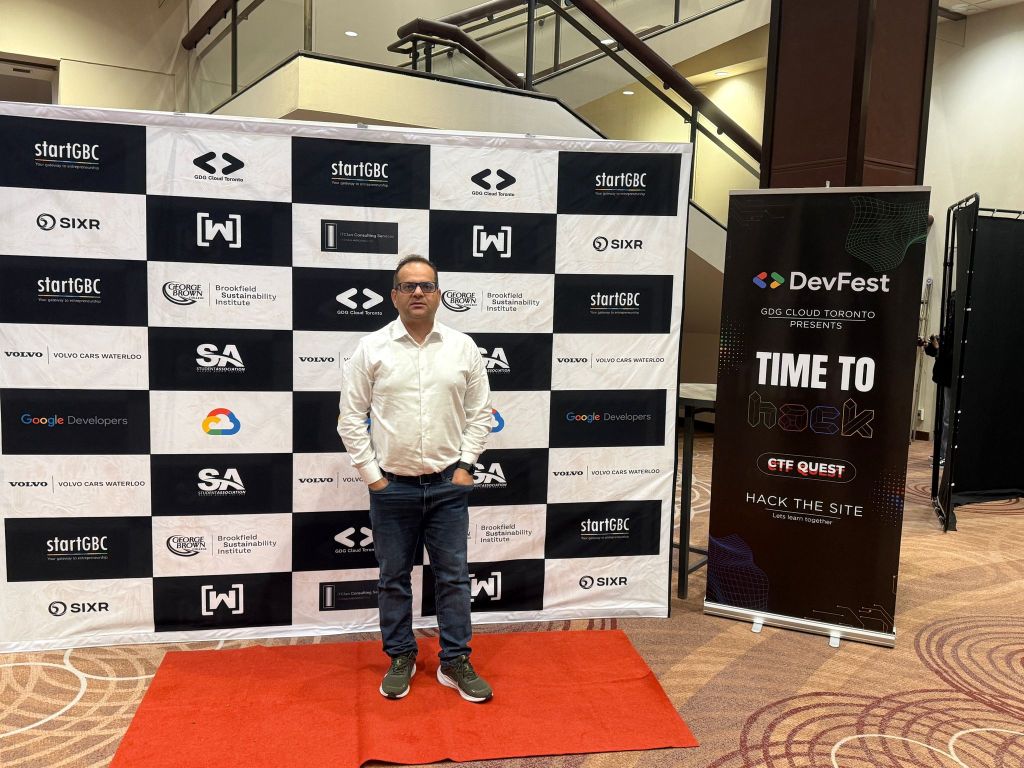
Google DevFest Toronto 2025 was an action-packed day filled with inspiration, community, and cutting-edge technology. Held on November 15 at the Sheraton Centre Toronto Hotel, this was my first-ever Google Developers Group DevFest, and it truly lived up to the hype.

From the moment I arrived, the energy was palpable. The schedule was packed with sessions from top Google and industry speakers, hands-on workshops, and numerous opportunities to connect with Toronto’s most passionate developers and tech professionals. One of my favorite parts was diving into the Capture the Flag challenge. Tackling cryptic puzzles alongside fellow problem-solvers pushed me beyond what I thought possible. Crossing the finish line earned me some great swag, including a GDG backpack and NFC keys that I’ll proudly use.

A standout workshop was “Apps Script: Vibe-code a Gmail add-on with Gemini CLI & MCP servers.” In this session, I built a Gmail add-on that uses Vertex AI’s image model to generate unique cat images on demand inside Gmail. Working hands-on with Gemini CLI, MCP servers, gcloud, and Apps Script gave me a practical look at the future of AI-driven cloud apps. I highly recommend this lab to anyone looking to blend code, cloud services, and creativity.

The event perfectly balanced learning, networking, and fun, demonstrating the power of the local developer community and the exciting innovations coming from Google Cloud and AI. For anyone interested in the future of tech, Google DevFest Toronto is a must-attend event to supercharge your skills and connect with like-minded professionals. I’m already looking forward to next year’s experience!

Event details: November 15, 2025, Sheraton Centre Toronto Hotel, 123 Queen Street West, Toronto, ON #GDGToronto #DevFest2025

Unify and activate your data for AI innovation


Unifying and activating your data has become the secret sauce for businesses aiming to unlock the full potential of AI. Many organizations rush to adopt new AI models, but without a strong, unified data foundation, these initiatives often stall or fail to deliver meaningful impact.

Most business leaders agree AI will be a key driver of revenue growth in the coming years. In fact, nearly nine out of ten believe AI is critical to staying competitive, and almost all who invest in AI see positive returns. But there’s a catch—over 80% say their organizations could accelerate AI adoption if their data infrastructure were stronger. Simply put, AI’s power is only as good as the quality and accessibility of your data.

Many enterprises still operate on data estates that have organically evolved over decades. These data landscapes are typically fragmented, with data scattered across multiple clouds, on-prem systems, and countless applications. This creates inefficiencies such as duplicate data copies, interoperability challenges, exposure risks, and vendor complexity.

To accelerate AI innovation, the first step is unification. Bringing all your data sources under a single, unified data lake with standardized governance creates a foundation for agility and trusted insights. Microsoft’s ecosystem supports this vision through OneLake, Azure Data Lake Storage, and unified access to operational databases like Azure SQL, Cosmos DB, and PostgreSQL, along with cloud stores like Amazon S3.

But unifying your data is just the starting point. The real magic happens when you transform this wealth of raw data into powerful, AI-ready assets. This means building pipelines that can clean, enrich, and model data so AI applications—from business intelligence to intelligent agents—can use them efficiently. Microsoft Fabric, Azure Databricks, and Azure AI Foundry are tightly integrated to support everything from data engineering and warehousing to AI model development and deployment.

Empowering your teams with easy access to insights is equally crucial for driving adoption. Self-service analytics tools and natural language-powered experiences like Power BI with Copilot help democratize data exploration. When users can ask questions in everyday language and get reliable answers, data literacy spreads quickly, accelerating decision-making.

Governance and security have to scale alongside innovation. With data flowing across clouds and services, maintaining compliance and reducing risk is non-negotiable. Microsoft Purview and Defender provide comprehensive governance layers, while Azure Databricks Unity Catalog and Fabric’s security controls ensure consistent policies, auditing, and access management across data and AI workloads.

Approaching data modernization with a focus on one impactful use case helps make the journey manageable and tangible. For example, a customer service scenario can unify interaction data, surface trends in Power BI, and leverage AI agents to improve real-time support—all while establishing a pattern applicable across finance, operations, and sales.

If your data landscape feels chaotic, you’re not alone. The key is to act deliberately by defining a clear data strategy, modernizing platforms, and starting with targeted AI-driven projects. Microsoft’s Intelligent Data Platform offers a unified, scalable foundation to help you unify, activate, and govern your data estate—setting your business up for AI success today and tomorrow.

Microsoft MVP PGI Invitation – Interaction and Feedback on AI Platform Deep Dive on Private Chatbots, Assistants and Agents

Over the past years, I had the incredible opportunity to attend several Microsoft Product Group Interactions (PGIs)—exclusive sessions where Microsoft MVPs engage directly with the product teams shaping the future of the Microsoft cloud ecosystem.

These PGIs focused on some of the most exciting innovations in the Azure AI space, including:

Azure Patterns & Practices for Private Chatbots and Assistants
Azure AI Agents & Tooling Frameworks
Secure, Enterprise-Grade Architectures for Private LLMs

As a Microsoft MVP in Azure & AI, it’s always energizing to engage directly with the engineering teams and share insights from real-world scenarios.

As someone who works closely with customers designing AI and data solutions, I was glad to provide feedback on:

  • 🗣️ Community Feedback
    Throughout the PGIs, MVPs had the opportunity to provide valuable feedback. I contributed thoughts around:
    Making solutions more accessible and intuitive for developers and architects
    Ensuring seamless integration across Azure services
    Enhancing user experience and governance tooling
    Continuing to focus on enterprise readiness and customization flexibility
    These insights help shape product roadmaps and ensure the technology aligns with real-world needs and challenges.

    🙌 Looking Ahead
    A big thank you to the Azure AI and Patterns & Practices teams for their openness, innovation, and collaboration. The depth of these sessions reflects Microsoft’s strong commitment to empowering the MVP community and evolving Azure AI responsibly and effectively.
    Stay tuned as I continue to share learnings, hands-on demos, and architectural best practices on my blog and YouTube channel!
    #AzureAI #MicrosoftMVP #PrivateAI #PowerPlatform #Copilot #AIAgents #MicrosoftFabric #AzureOpenAI #SemanticKernel #PowerBI #MVPBuzz

Navigating the Enterprise LLM Life Cycle with Azure AI

Introduction: The rise of Large Language Models (LLMs) has revolutionized the way enterprises approach artificial intelligence. From customer support to content generation, LLMs are unlocking new possibilities. However, managing the life cycle of these models requires a strategic approach. Azure AI provides a robust framework for enterprises to operationalize, refine, and scale LLMs effectively.

1. Ideation and Exploration: The journey begins with identifying the business use case. Developers explore Azure AI’s model catalog, which includes foundation models from providers like OpenAI and Hugging Face. Using a subset of data, they prototype and evaluate models to validate business hypotheses. For example, in customer support, developers test sample queries to ensure the model generates helpful responses.

2. Experimentation and Refinement: Once a model is selected, the focus shifts to customization. Techniques like Retrieval Augmented Generation (RAG) allow enterprises to integrate local or real-time data into prompts. Developers iterate on prompts, chunking methods, and indexing to enhance model performance. Azure AI’s tools enable bulk testing and automated metrics for efficient refinement.

3. Deployment and Monitoring: Deploying LLMs at scale requires careful planning. Azure AI supports seamless integration with enterprise systems, ensuring models are optimized for real-world applications. Continuous monitoring helps identify bottlenecks and areas for improvement. Azure AI’s Responsible AI Framework ensures ethical and accountable deployment.

4. Scaling and Optimization: As enterprises expand their use of LLMs, scalability becomes crucial. Azure AI offers solutions for managing large-scale deployments, including fine-tuning and real-time data integration. By leveraging Azure AI’s capabilities, businesses can achieve consistent performance across diverse scenarios.

Conclusion: The enterprise LLM life cycle is an iterative process that demands collaboration, innovation, and diligence. Azure AI empowers organizations to navigate this journey with confidence, unlocking the full potential of LLMs while adhering to ethical standards. Whether you’re just starting or scaling up, Azure AI is your partner in building the future of enterprise AI.

🍁 A True Blessing: Hosting the Canadian MVP Show – Azure & AI World 🍁

There are moments in life where passion meets purpose — and for me, that journey has been nothing short of a blessing.

It’s with immense gratitude and excitement that I share this milestone:
I’ve been honored seven times as a Microsoft MVP, and today, I continue to proudly serve the global tech community as the host of the Canadian MVP Show – Azure & AI World. 🇨🇦🎙️


🌟 A Journey Fueled by Community

From the beginning, the goal was simple: share knowledge, empower others, and build a space where ideas around Azure, AI, and Microsoft technologies could thrive.

Thanks to your incredible support, our content — including blogs, tutorials, and videos — has now reached over 1.1 million views across platforms. 🙌 That number isn’t just a metric — it’s a reflection of a passionate, curious, and ever-growing tech community.


🎥 Our YouTube Channel: Voices That Matter

The Canadian MVP Show YouTube channel has become a home for insightful conversations and deep dives into the world of Azure and AI. We’ve been joined by fellow Microsoft MVPs and Microsoft Employees, all of whom generously share their experiences, best practices, and forward-thinking ideas.

Each episode is a celebration of collaboration and community-driven learning.


🙏 The Microsoft MVP Experience

Being part of the Microsoft MVP program has opened doors I could’ve only dreamed of — from speaking at international conferences, to connecting with Microsoft product teams, and most importantly, to giving back to the global tech community.

The MVP award is not just recognition; it’s a responsibility — to uplift others, to be a lifelong learner, and to serve as a bridge between innovation and impact.


💙 Why It Matters

Technology is moving fast — but community is what keeps us grounded.

To be able to:

  • Democratize AI knowledge
  • Break down the complexities of cloud
  • Empower the next generation of developers and architects

…through this platform has been one of the greatest honors of my career.


🙌 Thank You

To every viewer, guest, supporter, and community member — thank you. Your encouragement, feedback, and shared passion make this journey worthwhile.

We’re just getting started — and the future of Azure & AI is brighter than ever. 🚀

Let’s keep learning, growing, and building together.

🔔 Subscribe & join the movement: @DeepakKaaushik-MVP on YouTube

With gratitude,
Deepak Kaushik
Microsoft MVP (7x) | Community Speaker | Show Host
My MVP Profile

🔍 Exploring Azure AI Open Source Projects: Empowering Innovation at Scale

The fusion of Artificial Intelligence (AI) and open source has sparked a new era of innovation, enabling developers and organizations to build intelligent solutions that are transparent, scalable, and customizable. Microsoft Azure stands at the forefront of this revolution, contributing actively to the open-source ecosystem while integrating these projects seamlessly with Azure AI services.

In this blog post, we’ll dive into some of the most impactful Azure AI open-source projects, their capabilities, and how they can empower your next intelligent application.


🧠 1. ONNX Runtime

What it is: A cross-platform, high-performance scoring engine for Open Neural Network Exchange (ONNX) models.

Why it matters:

  • Optimized for both cloud and edge scenarios.
  • Supports models trained in PyTorch, TensorFlow, and more.
  • Integrates directly with Azure Machine Learning, IoT Edge, and even browser-based apps.

Use Case: Deploy a computer vision model trained in PyTorch and serve it using ONNX Runtime on Azure Kubernetes Service (AKS) with GPU acceleration.


🤖 2. Responsible AI Toolbox

What it is: A suite of tools to support Responsible AI practices—fairness, interpretability, error analysis, and data exploration.

Key Components:

  • Fairlearn for bias detection and mitigation.
  • InterpretML for model transparency.
  • Error Analysis and Data Explorer for identifying model blind spots.

Why use it: Build ethical and compliant AI solutions that are transparent and inclusive—especially important for regulated industries.

Azure Integration: Works natively with Azure Machine Learning, offering UI and SDK-based experiences.


🛠️ 3. DeepSpeed

What it is: A deep learning optimization library that enables training of massive transformer models at scale.

Why it’s cool:

  • Efficient memory and compute usage.
  • Powers models with billions of parameters (like ChatGPT-sized models).
  • Supports zero redundancy optimization (ZeRO) for large-scale distributed training.

Azure Bonus: Combine DeepSpeed with Azure NDv5 AI VMs to train LLMs faster and more cost-efficiently.


🧪 4. Azure Open Datasets

What it is: A collection of curated, open datasets for training and evaluating AI/ML models.

Use it for:

  • Jumpstarting AI experimentation.
  • Benchmarking models on real-world data.
  • Avoiding data wrangling headaches.

Access: Directly available in Azure Machine Learning Studio and Azure Databricks.


🧩 5. Semantic Kernel

What it is: An SDK that lets you build AI apps by combining LLMs with traditional programming.

Why developers love it:

  • Easily plug GPT-like models into existing workflows.
  • Supports plugins, memory storage, and planning for dynamic pipelines.
  • Multi-language support: C#, Python, and Java.

Integration: Works beautifully with Azure OpenAI Service to bring intelligent, contextual workflows into your apps.


🌍 6. Project Turing + Turing-NLG

Microsoft Research’s Project Turing has driven advancements in NLP with models like Turing-NLG and Turing-Bletchley. While not always fully open-sourced, many pretrained models and components are available for developers to fine-tune and use.


🎯 Final Thoughts

Azure’s open-source AI projects aren’t just about transparency—they’re about empowering everyone to build smarter, scalable, and responsible AI solutions. Whether you’re an AI researcher, ML engineer, or developer building the next intelligent app, these tools offer the flexibility of open source with the power of Azure.

🔗 Resources to explore:

Azure AI Content Safety – Real time Safety

In today’s digital landscape, ensuring the safety and appropriateness of user-generated content is paramount for businesses and platforms. Microsoft’s Azure AI Content Safety offers a robust solution to this challenge, leveraging advanced AI models to monitor and moderate content effectively.

Comprehensive Content Moderation

Azure AI Content Safety is designed to detect and filter harmful content across various formats, including text and images. It focuses on identifying content related to hate speech, violence, sexual material, and self-harm, assigning severity scores to prioritize moderation efforts. This nuanced approach reduces false positives, easing the burden on human moderators.

azure.microsoft.com

Seamless Integration and Customization

The service offers both Text and Image APIs, allowing businesses to integrate content moderation seamlessly into their existing workflows. Additionally, Azure AI Content Safety provides a Studio experience for a more interactive setup. For specialized needs, the Custom Categories feature enables the creation of tailored filters, allowing organizations to define and detect content specific to their unique requirements.

azure.microsoft.com

Real-World Applications

Several organizations have successfully implemented Azure AI Content Safety to enhance their platforms:

  • Unity: Developed Muse Chat to assist game creators, utilizing Azure OpenAI Service content filters powered by Azure AI Content Safety to ensure responsible use. azure.microsoft.com
  • IWill Therapy: Launched a Hindi-speaking chatbot providing cognitive behavioral therapy across India, employing Azure AI Content Safety to detect and filter potentially harmful content. azure.microsoft.com

Integration with Azure OpenAI Service

Azure AI Content Safety is integrated by default into the Azure OpenAI Service at no additional cost. This integration ensures that both input prompts and output completions are filtered through advanced classification models, preventing the dissemination of harmful content.

azure.microsoft.com

Getting Started

To explore and implement Azure AI Content Safety, businesses can access the service through the Azure AI Foundry. The platform provides resources, including concepts, quickstarts, and customer stories, to guide users in building secure and responsible AI applications.

azure.microsoft.com

Incorporating Azure AI Content Safety into your digital ecosystem not only safeguards users but also upholds the integrity and reputation of your platform. By leveraging Microsoft’s advanced AI capabilities, businesses can proactively address the challenges of content moderation in an ever-evolving digital world.

Azure AI Foundry: Empowering Developers to Shape the Future of AI

In today’s fast-evolving digital landscape, AI is more than just an innovation driver—it’s the foundation for the future. Azure AI Foundry is Microsoft’s trusted platform that enables developers to build, scale, and deploy AI solutions safely, securely, and responsibly.

Unlocking Innovation with Confidence

In the rapidly evolving landscape of artificial intelligence, developers require a platform that not only accelerates innovation but also ensures security and responsibility. Enter Azure AI Foundry—a trusted, enterprise-grade platform designed to empower developers in building, deploying, and managing AI applications seamlessly.

Unified AI Development Platform

Azure AI Foundry serves as a comprehensive hub, integrating a vast array of AI tools and machine learning models. This unified approach streamlines the development process, enabling developers to explore, build, test, and deploy generative AI applications efficiently. By providing a centralized platform, Azure AI Foundry eliminates the complexities associated with juggling multiple tools and services, fostering a more cohesive development environment.

Enterprise-Grade Security and Scalability

Understanding the critical importance of security and scalability in AI solutions, Azure AI Foundry is built on robust, enterprise-grade infrastructure. Developers can confidently scale their applications from proof of concept to full production, knowing that continuous monitoring and refinement tools are in place to support long-term success. This ensures that AI applications not only perform optimally but also adhere to stringent security standards.

Collaboration and Lifecycle Management

Collaboration is at the heart of Azure AI Foundry. The platform offers easy-to-manage project containers that facilitate teamwork across the entire application lifecycle. From initial exploration to deployment, teams can work cohesively, leveraging shared resources and insights. This collaborative framework accelerates development timelines and promotes the sharing of best practices, leading to more innovative and effective AI solutions.

Commitment to Responsible AI

Azure AI Foundry is deeply committed to promoting responsible AI practices. The platform provides tools and guidelines to ensure that AI applications are developed ethically, with considerations for fairness, transparency, and accountability. By embedding responsible AI principles into the development process, Azure AI Foundry helps developers create solutions that are not only innovative but also trustworthy and aligned with societal values.

In summary, Azure AI Foundry stands as a pivotal platform for developers aiming to harness the full potential of AI. By offering a secure, scalable, and collaborative environment grounded in responsible practices, it paves the way for the next generation of AI-driven innovations.

For more detailed information, visit the Azure AI Foundry documentation.

🚀 Join the AI revolution with Azure AI Foundry and shape the future today!

Unleashing the Future of Automation with Azure AI Agent Service

In today’s rapidly evolving technological landscape, businesses are continually seeking innovative solutions to enhance productivity and streamline operations. Microsoft’s Azure AI Agent Service emerges as a groundbreaking platform, empowering developers to build, deploy, and manage AI agents that revolutionize automation across various industries.

What is Azure AI Agent Service?

Azure AI Agent Service is a fully managed platform designed to facilitate the creation of intelligent agents—autonomous microservices capable of performing tasks, answering queries, and automating complex workflows. By integrating generative AI models with real-world data sources, these agents can seamlessly interact with existing systems, providing scalable and secure solutions without the overhead of managing underlying infrastructure.

learn.microsoft.com

Key Features and Benefits

  1. Rapid Development and Automation: Developers can swiftly create agents that integrate with a multitude of tools and systems, including Azure Logic Apps and Azure Functions. This integration enables both deterministic and non-deterministic task execution, automating routine processes and enhancing operational efficiency. techcommunity.microsoft.com
  2. Flexible Model Selection: Azure AI Agent Service supports a diverse range of models, such as GPT-4o, Llama 3.1, Mistral, and Cohere Command R+. This flexibility allows businesses to choose models that best align with their specific use cases and performance requirements. learn.microsoft.com
  3. Seamless Knowledge Integration: Agents can access and synthesize information from various data sources, including Microsoft Bing, Azure AI Search, and proprietary databases. This capability ensures that responses are contextually relevant and grounded in accurate, up-to-date information. techcommunity.microsoft.com
  4. Enterprise-Grade Security and Scalability: Built with a focus on security, Azure AI Agent Service offers features like virtual private networks, managed storage options, and comprehensive observability through OpenTelemetry. This design ensures that deployments are both secure and scalable, meeting the rigorous demands of enterprise environments. learn.microsoft.com

Real-World Applications

Azure AI Agent Service is transforming industries by automating complex tasks and enhancing decision-making processes:

  • Healthcare: AI agents automate administrative workflows, streamline access to clinical research, and assist in patient data management, leading to improved efficiency and patient care. techcommunity.microsoft.com
  • Energy: Companies utilize AI-powered monitoring and predictive maintenance to optimize grid performance, contributing to sustainability efforts and operational excellence. techcommunity.microsoft.com
  • Retail and Hospitality: Businesses deploy AI assistants to enhance itinerary planning, personalize customer recommendations, and automate inquiries, thereby elevating customer experiences. techcommunity.microsoft.com
  • Professional Services: Consulting firms leverage AI agents to analyze financial reports, generate insights, and support strategic decision-making, driving value for clients. techcommunity.microsoft.com

Getting Started with Azure AI Agent Service

Embarking on the journey with Azure AI Agent Service is straightforward:

  1. Set Up Your Environment: Begin by configuring your Azure AI Foundry environment, ensuring you have the necessary tools and permissions.
  2. Develop Your Agent: Utilize the Azure AI Foundry SDK to create agents tailored to your specific business needs. Define the model, instructions, and tools your agent will employ. learn.microsoft.com
  3. Deploy and Monitor: Leverage the Azure AI Foundry portal to deploy, debug, and monitor your agents, ensuring optimal performance and continuous improvement. learn.microsoft.com

By harnessing the capabilities of Azure AI Agent Service, organizations can unlock new levels of automation, efficiency, and innovation, positioning themselves at the forefront of the AI-driven future.

Real-World Applications

Businesses across various industries are leveraging Azure AI Agent Service to automate tasks and enhance productivity. For instance, in healthcare, AI agents are automating administrative workflows and assisting with patient data management. In the energy sector, companies are utilizing AI-powered monitoring and predictive maintenance to optimize grid performance and drive sustainability efforts.

techcommunity.microsoft.com

Getting Started

Embarking on your journey with Azure AI Agent Service is straightforward. Begin by setting up an Azure AI Hub to establish your app environment and necessary resources. From there, create an Azure AI project under your Hub, which provides an endpoint for your application and access to essential services within your tenant.

learn.microsoft.com

In conclusion, Azure AI Agent Service stands at the forefront of AI-powered automation, offering a robust, secure, and flexible platform for businesses aiming to harness the power of artificial intelligence. By integrating Azure AI Agent Service into your operations, you can unlock new possibilities, streamline processes, and stay competitive in an increasingly digital world.

Sources

Favicon