Deepak Kaushik Saskatoon, SK, Canada Email: kaushik.deepak@outlook.comLinkedIn: linkedin.com/in/davekaushikTwitter: ThinkForDeepakWebsites: deepak-kaushik.com (Portfolio) c-sharpcorner.com/members/deepak-kaushik (Blog) About Mentor: 4X Microsoft Azure MVPAzure Architect and AdvisorInternational Speaker, Trainer & Industry ExpertTOGAF Certified Architect Multiple Microsoft technology certificationsVarious publications & blogs Education: Master of Science in Information Technology, India
SAS Certified Advanced Programmer with experience in data engineering, Data analysis, Business Intelligence
Data Science Enthusiast with experience in Retail, Insurance, Agriculture, Banking & Finance domain
Education:
Master of Engineering from, DAVV, India (Assessed by WES)
Pursuing Master of Science in Data Science with IIITB, India and LJMU, UK.
The objective of Mentorship –
I am starting my cloud journey with Industry experts like Deepak. The objective is to learn the fundamentals of cloud and apply the gained knowledge in Industry-specific projects & POCs.
Understand & build Architecture of Azure Data Factory based applications
Understand and apply various applications of Azure Data Factory in the industry
Learn & apply Data Visualization techniques using Power BI
Learn various concepts used in Azure Data engineering & Azure AI & ML certification preparation
In recent years, the field of artificial intelligence has witnessed remarkable advancements, with generative AI emerging as a transformative technology with vast potential. At the forefront of this revolution is Microsoft Azure Generative AI, a cutting-edge platform that leverages deep learning techniques to create, innovate, and inspire. As we look ahead to the next five years, the future of Azure Generative AI promises to be nothing short of extraordinary. Let’s explore the exciting possibilities that lie ahead, accompanied by a visual representation to illustrate its evolution.
The Current Landscape
Before delving into the future, let’s take a moment to appreciate the present. Microsoft Azure Generative AI has already made significant strides, enabling developers, artists, and innovators to unleash their creativity and push the boundaries of what’s possible. From generating lifelike images and videos to synthesizing natural language and music, Azure Generative AI has demonstrated its versatility and impact across diverse domains.
Visualizing the Future
Year 1: Enhanced Creativity and Personalization
In the next year, we anticipate Azure Generative AI to focus on enhancing creativity and personalization across various applications. With improved algorithms and training techniques, users will be able to generate highly realistic images, videos, and 3D models tailored to their specific preferences and requirements. Whether it’s designing custom avatars, creating personalized advertisements, or generating immersive virtual environments, Azure Generative AI will empower users to express themselves in new and exciting ways.
Year 3: Cross-Domain Integration and Collaboration
By year three, we envision Azure Generative AI breaking down barriers between different domains and facilitating seamless collaboration among diverse stakeholders. Through integrations with other Azure services and third-party platforms, users will be able to leverage generative AI capabilities within their existing workflows and applications. Whether it’s incorporating AI-generated content into gaming environments, integrating virtual assistants into business applications, or enhancing customer experiences with personalized recommendations, Azure Generative AI will play a central role in driving innovation and collaboration across industries.
Year 5: Human-Centric AI and Ethical Considerations
Looking ahead to year five, we anticipate Azure Generative AI to prioritize human-centric design principles and ethical considerations. As AI continues to evolve and play an increasingly prominent role in society, it’s essential to ensure that it aligns with human values and respects individual privacy and autonomy. Azure Generative AI will place a strong emphasis on transparency, fairness, and accountability, empowering users to understand and mitigate the potential risks associated with AI-generated content. By fostering a culture of responsible AI usage, Azure Generative AI will pave the way for a more inclusive and equitable future.
Conclusion
The future of Microsoft Azure Generative AI is filled with promise and potential. From enhancing creativity and personalization to fostering collaboration and addressing ethical considerations, Azure Generative AI will continue to push the boundaries of what’s possible and empower individuals and organizations to achieve their goals. As we embark on this exciting journey, let us embrace the transformative power of AI and work together to build a future that is both innovative and inclusive.
In the ever-evolving world of cloud computing, serverless architectures have emerged as a game-changer, enabling developers to focus solely on writing code without worrying about provisioning, scaling, or managing servers. Azure Functions, Microsoft’s serverless computing offering, empowers developers to build and run event-driven applications in a truly serverless environment, unlocking new levels of scalability, cost-efficiency, and agility.
Understanding Serverless Computing:
Serverless computing is a cloud execution model where the cloud provider dynamically allocates resources and automatically scales the application based on incoming events or triggers. Developers simply write and deploy their code as functions, and the cloud provider handles the underlying infrastructure, scaling, and execution. This approach eliminates the need for developers to manage servers, allowing them to focus on building innovative and engaging applications.
Azure Functions, The Serverless Powerhouse:
Azure Functions is a fully managed serverless compute service that enables you to run code on-demand without provisioning or managing servers. Functions are event-driven, meaning they are triggered by various events or data sources, such as HTTP requests, cloud service events, timers, or message queues. With Azure Functions, developers can create highly scalable and responsive applications without worrying about the underlying infrastructure.
Key Features and Benefits:
1. Event-Driven Architecture: Functions can be triggered by a wide range of events, including HTTP requests, Azure Storage events, Service Bus messages, Cosmos DB changes, and more. This enables developers to build highly scalable and responsive event-driven architectures that can efficiently process data and react to real-time events.
2. Pay-per-Execution: With Azure Functions, you only pay for the compute resources consumed during execution. This makes it highly cost-effective for workloads with variable or unpredictable demand, as you don’t have to pay for idle resources when your application is not processing any requests.
3. Automatic Scaling: Functions automatically scale up or down based on incoming traffic, ensuring optimal resource utilization and performance without manual intervention. This allows applications to handle sudden spikes in traffic or fluctuating demand without any additional configuration or management.
4. Language Support: Azure Functions supports a variety of programming languages, including C#, JavaScript, F#, Java, PowerShell, and Python. This allows developers to leverage their existing skills and tooling, making it easy to adopt serverless computing in their projects.
5. Binding and Triggers: Functions integrate seamlessly with other Azure services through input and output bindings, simplifying the process of reading and writing data to various data sources (e.g., Azure Storage, Cosmos DB, Service Bus). This enables developers to build complex applications with minimal code and configuration.
6. Serverless Workflow Orchestration: Azure Durable Functions enable you to build stateful serverless workflows, allowing you to chain multiple functions together and maintain state throughout the execution. This allows developers to build complex, stateful applications while still leveraging the benefits of serverless computing.
Use Cases and Applications:
Azure Functions excels in various scenarios, such as building microservices, processing data streams, integrating systems and services, implementing serverless APIs, and building event-driven architectures. Some common use cases include:
1. Data Processing Pipelines: Ingest, process, and transform data from various sources using event-driven functions. This enables developers to build efficient data processing pipelines that can handle large volumes of data and react to real-time events.
2. Internet of Things (IoT): Build scalable and responsive IoT solutions by processing and responding to device telemetry data. Azure Functions can handle the high-volume, event-driven nature of IoT data, making it an ideal choice for building IoT applications.
3. Webhooks and API Endpoints: Rapidly build and deploy serverless APIs and webhooks to handle incoming HTTP requests. Azure Functions simplifies the process of creating and managing APIs, allowing developers to focus on building the core functionality of their applications.
4. Task Scheduling and Background Jobs: Execute scheduled or on-demand background tasks without managing long-running processes or servers. Azure Functions can be triggered by timers, making it easy to schedule recurring tasks or execute background jobs as needed.
Throughout this article, we’ve explored the serverless computing paradigm and how Azure Functions empowers developers to build and run event-driven applications with unparalleled scalability, cost-efficiency, and agility. In the following articles, we’ll dive deeper into practical examples, best practices, and advanced features of Azure Functions, helping you unlock the full potential of serverless computing in your projects.
In today’s digital landscape, delivering web applications efficiently and seamlessly is crucial for meeting user expectations and staying ahead of the competition. Azure Web Apps, a fully managed platform as a service (PaaS) offering from Microsoft, empowers developers to build, deploy, and manage web applications with ease, scalability, and cost-effectiveness.
Deploying Web Apps on Azure:
Azure Web Apps supports various deployment options, catering to different development workflows and preferences. Here are some common deployment methods:
1. Azure App Service Deployment Center: This built-in deployment feature within the Azure portal allows you to connect your web app to a source control repository (e.g., GitHub, Azure Repos, BitBucket) and enable continuous deployment. With each commit to your repository, the deployment center automatically builds and deploys your application to Azure. The integration with popular source control systems makes it easy to manage your code, track changes, and collaborate with your team.
2.Azure DevOps: Integrate your web app deployment with Azure DevOps, Microsoft’s suite of services for version control, agile planning, and continuous integration and deployment (CI/CD). Configure build and release pipelines to automate the entire deployment process, from compiling code to deploying to multiple environments (e.g., development, staging, production). Azure DevOps also offers features like work item tracking, test management, and reporting, making it an ideal choice for teams looking for a comprehensive development management solution.
3.FTP/FTPS: For simpler deployments or legacy applications, you can use FTP or FTPS to upload your application files directly to the web app’s file system. This method is suitable for small-scale applications or when you need to quickly deploy a static website. However, it lacks the automation and collaboration benefits offered by other deployment methods.
4.Cloud Shell: Azure Cloud Shell is a browser-based command-line experience that allows you to manage Azure resources, including deploying web apps, directly from the Azure portal or a remote machine. With support for Bash and PowerShell, you can use familiar command-line tools and scripts to automate and manage your deployments.
5. Local Git Deployment: Developers can also deploy their applications using Git directly from their local development environment, enabling a more streamlined and familiar workflow. This approach allows you to leverage Git’s version control capabilities while deploying your application to Azure with minimal configuration.
Managing and Scaling Web Apps:
Once deployed, Azure Web Apps provides a range of features and capabilities for managing and scaling your applications effectively:
1. Auto-scaling: Configure auto-scaling rules to automatically adjust the number of instances (scale out) or allocated resources (scale up) based on predefined metrics like CPU utilization or HTTP queue length. This ensures optimal performance and cost efficiency by matching resource allocation to real-time demand. Auto-scaling can be configured based on a schedule or specific performance thresholds, allowing you to fine-tune your application’s scalability to meet your unique requirements.
2. Deployment Slots: Create and manage multiple deployment slots for each web app, enabling techniques like blue-green deployments, canary releases, and A/B testing without impacting the production environment. Deployment slots allow you to test new features, validate performance, and ensure compatibility before swapping the staging environment with the production environment. This approach minimizes downtime and reduces the risk of deploying untested or unstable code to your live application.
3. Backup and Restore: Automatically back up your web app’s content, configuration, and databases at scheduled intervals or on-demand. Restore these backups to a different web app or to the same web app at a previous point in time, ensuring data protection and disaster recovery. Azure Web Apps also supports geo-redundant backups, enabling you to store your backups in different regions for added resilience and faster recovery in case of a regional outage.
4. Monitoring and Diagnostics: Monitor your web app’s performance, diagnose issues, and gain insights into application health and resource utilization using Azure Application Insights, Log Analytics, and other monitoring tools. These tools provide real-time telemetry, customizable dashboards, and powerful analytics capabilities to help you identify and resolve performance bottlenecks, errors, and other issues impacting your application’s user experience.
5. Security and Compliance: Secure your web apps with built-in features like SSL/TLS encryption, authentication and authorization options (e.g., Azure Active Directory, social providers), and compliance certifications (e.g., ISO, PCI DSS, HIPAA). Azure Web Apps also supports virtual network integration, allowing you to isolate your web app within your own virtual network for enhanced security and network control.
Throughout this article, we’ve explored the deployment and management capabilities of Azure Web Apps, highlighting its versatility, scalability, and ease of use. In the following articles, we’ll dive deeper into specific features and best practices for building and deploying high-performance, secure, and scalable web applications on Azure. By leveraging Azure Web Apps, developers can streamline their development workflows, automate deployment processes, and focus on delivering innovative and engaging web applications to their users.
As businesses evolve in the digital era, migrating critical SAP systems to Azure has become a strategic imperative. Microsoft’s refined capacity management processes on Azure minimize downtime, risks, and costs while enhancing employee efficiencies. This article delves into IoTCoast2Coast’s measured approach to migrating sensitive data and confidential workloads with SAP systems, leveraging Azure’s agility and scalability.
The Right Approach to SAP Migration
Migrating mission-critical SAP systems to Azure requires a strategic approach to ensure maximum cost savings, scalability, and agility without disrupting business operations. IoTCoast2Coast adopted a horizontal strategy, migrating low-risk environments like sandboxes first to gain Azure migration experience. This approach mitigates risks while building confidence in Azure’s capabilities.
Prerequisites for Azure AD Integration with SAP Cloud Platform
To configure Azure AD integration with SAP Cloud Platform, specific prerequisites are necessary, including Azure and SAP Cloud Platform subscriptions, basic Azure knowledge, and appropriate user permissions.
Creating an Optimal SAP Environment on Azure
Azure stands out as the preferred platform for SAP deployments due to its reliability, scalability, and compliance capabilities. Azure supports a wide range of SAP solutions, including SAP HANA and S/4 HANA, providing a robust foundation for enterprise-grade SAP environments.
Telemetry Solution for SAP on Azure
Managing telemetry and monitoring for SAP landscapes requires a comprehensive approach. Microsoft developed the Unified Telemetry Platform (UTP) on Azure, enabling service maturity, compliance, and holistic health monitoring for SAP and other business processes.
Implementing UTP in SAP on Azure
The implementation of UTP involves creating a reusable custom method and configuration table to drive consistent telemetry payloads. This method integrates seamlessly with SAP business process events, ensuring accurate telemetry data capture and analysis.
Azure Monitor for Enhanced Monitoring and Alerting
Azure Monitor plays a vital role in monitoring and alerting for SAP on Azure environments. It provides deep insights into application performance, infrastructure health, and end-to-end business processes. Leveraging tools like Azure Application Insights and Azure Log Analytics enables proactive monitoring and issue resolution.
Best Practices and Lessons Learned
Key best practices include performing a thorough inventory of internal processes, capturing true end-to-end telemetry, building for Azure-native SAP components, and standardizing data usage across the organization. These practices ensure accurate monitoring, reporting, and business intelligence insights.
Conclusion
Microsoft’s Azure platform, coupled with refined monitoring and telemetry solutions like UTP and Azure Monitor, empowers enterprises to optimize SAP migration, enhance business visibility, and drive operational excellence. By adopting best practices and leveraging Azure’s capabilities, organizations can unlock the full potential of SAP on Azure, paving the way for digital transformation and business success in the cloud era.
With the rise of big data, businesses need robust data platforms to support analytics and machine learning. Two leading options are Databricks and Microsoft’s new Fabric platform. This article compares the key features and use cases of Databricks vs Fabric to help you choose the right tool.
What is Databricks?
Databricks provides a unified analytics platform optimized for big data and AI. It runs on Apache Spark and is available on all major cloud providers including AWS, Azure, and Google Cloud.
Key capabilities include:
Optimized Apache Spark performance – Runs Spark workloads faster and more reliably than standalone deployments.
Unified analytics – Combining data engineering, data science, and business intelligence in one platform.
Interactive notebooks – Supports collaboration via notebooks in Python, R, Scala, and SQL.
Machine learning – Integrated platform for the machine learning lifecycle including experiment tracking, model management, and deployment.
Delta Lake – Provides performance boost and reliability for big data workloads. Brings ACID transactions to Apache Spark.
Overall, Databricks excels at large-scale data processing and machine learning applications leveraging Apache Spark.
Introducing Microsoft Fabric
Microsoft Fabric is a new integrated data platform launched in 2022. It unifies data services within Azure and aims to simplify analytics.
Key highlights of Fabric:
Unified environment – Combining data engineering, machine learning, and business intelligence tools in one platform.
Built on Azure – Leverages underlying Azure services like Synapse Analytics, Data Factory, and Power BI.
Lightweight notebooks – Supports collaborative notebooks for data exploration and visualization.
Power BI integration – Natively supports Power BI reports and dashboards.
Microservices architecture – Designed for modern containerized application development.
Fabric focuses on enabling easy collaboration for analytics and BI use cases within the Azure ecosystem.
Architecture Comparison
Under the hood, Databricks and Fabric both utilize Apache Spark for data processing workloads. However, their architecture and approach differ:
Databricks
Runs Spark workloads within the customer’s own cloud infrastructure.
Charges are based on usage metrics like DBUs and instance hours.
Cloud agnostic – available on AWS, Azure, and Google Cloud.
Specialized features for big data, streaming, and ML.
*image sourced from Microsoft
Microsoft Fabric
Tightly integrated into Azure services.
Capacity-based pricing model rather than usage-based.
Leverages Azure-native services like Synapse Analytics.
General purpose features with a focus on collaboration.
*image sourced from Microsoft
Databricks provides more flexibility for the production of big data workloads while Fabric simplifies analytics within Azure.
Key Differences
Category
Databricks
Microsoft Fabric
Approach
Cloud agnostic
Azure-centric
Usage
Big data & ML
Collaboration & BI
Pricing
Consumption-based
Capacity-based
Features
Delta Lake, MLflow
Power BI integration
When to Choose Databricks
Databricks shines for large-scale data processing and machine learning applications. It’s a good choice when:
You need a cost-effective Apache Spark platform.
Your data pipeline requires handling streaming data at scale.
Your data science teams want an end-to-end ML platform.
You need reliability features like Delta Lake for your big data lake.
You require a cloud-agnostic platform available across AWS, Azure, and GCP.
When to Choose Microsoft Fabric
Fabric simplifies collaboration and BI-focused analytics within Azure. Consider it if:
You want easy access to Power BI and Azure Synapse capabilities.
Your users will benefit from its collaborative notebooks.
Your analytics workloads are focused on business intelligence.
You want a unified data environment within the Azure ecosystem.
You need built-in support for microservices and containers.
Conclusion
Databricks outperforms for big data and machine learning use cases while Microsoft Fabric enables straightforward collaboration and BI within Azure. Evaluate their key features and your business needs to choose the right platform. Both options help simplify data analytics, but with different approaches.
Azure offers a vast array of services tailored to meet the diverse needs of developers. In this article, we’ll explore some of the most popular and powerful services that can significantly enhance your development experience and application capabilities.
Azure App Service: A Fully Managed Platform for Web Applications and APIs
Azure App Service is a fully managed platform that allows you to quickly build, deploy, and scale web applications and APIs written in various languages, including .NET, Java, Node.js, Python, and more. App Service supports multiple deployment options, such as Git, Docker containers, and continuous deployment from Azure DevOps, providing flexibility and ease of use.
Azure Functions: Embrace Serverless Computing
Azure Functions enables you to run code without provisioning or managing servers. Functions are event-driven, scalable, and charged based on consumption, making them ideal for building microservices, data processing pipelines, and integrating with other Azure services. With Azure Functions, you can focus on writing code and let Azure handle the infrastructure.
Azure Cosmos DB: A Globally Distributed, Multi-Model Database Service
Azure Cosmos DB is a globally distributed, multi-model database service that supports various data models, including key-value, document, graph, and columnar. Cosmos DB offers features like multi-master replication, automatic indexing, and tunable consistency levels, ensuring high availability, scalability, and low latency for your applications.
Azure Kubernetes Service (AKS): Managed Kubernetes for Containerized Applications
Deploy and manage containerized applications at scale with AKS, a fully managed Kubernetes service. AKS simplifies the provisioning, scaling, and management of Kubernetes clusters, enabling rapid deployment and scaling of containerized workloads. With AKS, you can easily orchestrate your containerized applications, ensuring efficient resource utilization and high availability.
Azure Cognitive Services: Infuse Your Applications with Intelligent Capabilities
*image sourced from Google
Azure Cognitive Services offers pre-built AI models and APIs that enable you to infuse your applications with intelligent capabilities. Cognitive Services includes functionalities like computer vision, speech recognition, language understanding, and decision-making, empowering you to create intelligent and engaging user experiences.
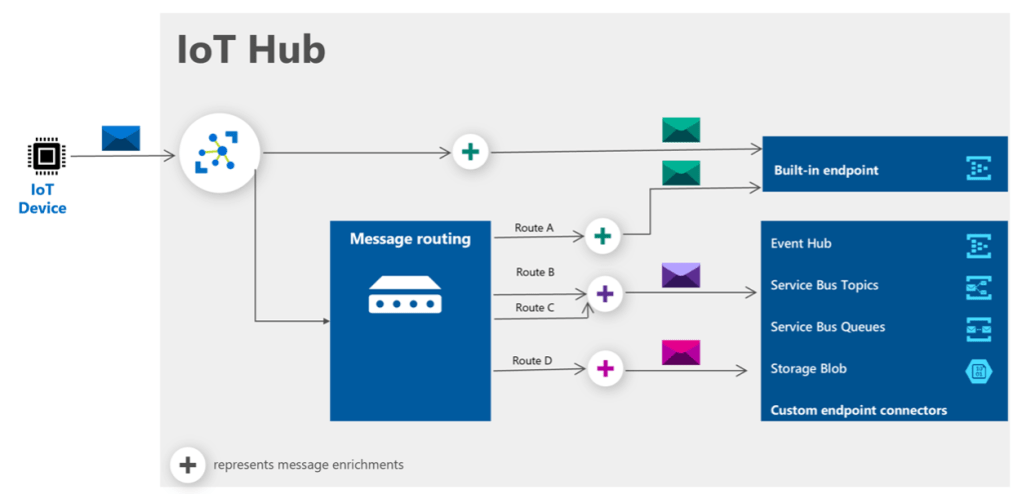
Azure IoT Hub: Build and Manage Secure, Scalable IoT Solutions
*image sourced from Google
Azure IoT Hub enables you to connect, monitor, and manage billions of IoT devices with ease. Leverage cloud-to-device messaging, device twin management, and seamless integration with other Azure services for comprehensive IoT application development. With Azure IoT Hub, you can create secure, scalable, and reliable IoT solutions.
Azure DevOps: Streamline Your Development Lifecycle
*image sourced from Google
Azure DevOps is a suite of services for version control, agile planning, continuous integration and deployment, automated testing, and monitoring. DevOps enables collaborative development, automated release pipelines, and seamless integration with other Azure services, ensuring a smooth and efficient development lifecycle.
Azure Machine Learning: Build, Train, and Deploy Machine Learning Models at Scale
*image sourced from Google
Azure Machine Learning is a comprehensive service that supports the entire machine learning lifecycle, from data preparation and model training to deployment and management. With Azure Machine Learning, you can build, train, and deploy machine learning models at scale, infusing your applications with intelligent capabilities.
These are just a few examples of the powerful services Azure offers for developers. Throughout the remaining articles in this series, we’ll dive deeper into specific services, exploring their features, use cases, and best practices for leveraging them in your development projects. By familiarizing yourself with these services, you’ll be well-equipped to build, deploy, and manage modern, scalable, and secure applications on Azure.
Generative AI is a category of artificial intelligence technology that can produce various types of content, including text, imagery, audio, synthetic data and other media using generative models. These systems rely on machine learning algorithms and neural networks, particularly generative models, to create new content based on patterns they’ve learned from vast amounts of existing data.These models are capable of creating content that is not directly copied from existing data but is instead generated based on patterns and information they’ve learned during training.
Generative AI has uses across a wide range of industries, including art, writing, script writing, software development, product design, healthcare, finance, gaming, marketing, and fashion.
*images from google
ChatGPT, example of a text based GenAI chatbot
*images from google
DALL-E, example of a text to image GenAI model
Generative models, a key component of generative AI, are designed to learn the underlying statistical patterns and structures of the training data. By capturing these patterns, they can then generate new data that closely resembles the original dataset. There are several types of generative models, with the most well-known being Generative Adversarial Networks (GANs), Variational Autoencoders (VAEs), and Recurrent Neural Networks (RNNs).
How Does Generative AI Work?
Generative Adversarial Networks (GANs) are a well-known generative AI approach. A generator and a discriminator, two neural networks that cooperate in competition, make up a GAN.
The Generator neural network model’s objective is to produce artificial data that is similar to the real data. It creates content by converting random noise into more organized representations, like pictures. When it comes to text generation, it picks up the ability to put together cohesive sentences and paragraphs.
The Discriminator neural network model’s job is to assess the generated material and identify if it is authentic or fraudulent. It has seen a great deal of actual data and is able to differentiate it from fake data.
The generator aims to create data (e.g., images) that is similar to a given dataset, while the discriminator’s job is to distinguish between real data and data generated by the generator. The generator continually refines its approach to create content, trying to deceive the discriminator into accepting its creations as real. Meanwhile, the discriminator becomes increasingly skilled at telling real from fake. This dynamic creates a feedback loop that pushes both networks to improve their performance over time.
Transformers
The power of generative AI comes from the use of transformers. Transformers produced a 2018 revolution in natural language processing.
Transformers, introduced by Vaswani et al. in the paper “Attention Is All You Need” in 2017, are a type of neural network architecture designed to handle sequential data, making them especially well-suited for Natural Language Processing (NLP) tasks.
Image Credit: Google Cloud Skill Boost
At a high level, a transformer model consists of an encoder and decoder.The encoder encodes the input sequence and passes it to the decoder, which learns how to decode the representation for a relevant task.
While transformers themselves are not inherently generative models, they provide a crucial foundation for generative AI. In generative AI applications, transformers can be used to generate content, such as text, images, or even code, by leveraging their ability to capture complex patterns and relationships within the data.
Applications
There are numerous uses for generative AI in a variety of sectors. Here are a few noteworthy instances:
Art & ingenuity: Generative AI is capable of producing unique works of poetry, music, and art that frequently test the bounds of human ingenuity. It has made it possible for musicians and artists to experiment with new mediums.
Content Generation: To save time and resources, content creators can utilize generative AI to automate the creation of articles, reports, or product descriptions.
Image and Video Generation: Lifelike images and videos can be produced using generative AI, which has uses in design, entertainment, and advertising.
Generative AI in healthcare: It can help create artificial medical images to help diagnose illnesses or train medical personnel.
Natural language processing: This technology can be applied to the creation of chatbots, conversational agents, and even language translation.
Anomaly Detection: In cybersecurity, generative AI can help detect anomalies in network traffic or identify fraudulent activities.
Code generation: Generative AI can assist developers by real-time code auto-completion and suggestions. Help you debug your lines of source code, explain your code to you line by line, translate code from one language to another, generate documentation and tutorials for source code and much more.
Conclusion
Rapid advancement has allowed generative AI to become a game-changing technology that has the power to completely disrupt several sectors. Its capacity to produce content that is nearly identical to that of human labor creates new avenues for automation and creativity. But it also brings up significant moral and societal issues, like worries about deepfakes and improper use of this technology.
It is critical that developers, researchers, and society as large handle these issues in a responsible and moral manner as generative AI advances. Generative AI has the potential to unleash hitherto unimaginable levels of creativity and invention given the correct methodology.
In the ever-evolving landscape of enterprise technology, the seamless operation of mission-critical applications such as SAP is paramount. Microsoft Azure stands out as a trusted path to enterprise-ready innovation, offering a robust platform for running SAP solutions in the cloud with unparalleled reliability and scalability.
System Reliability and Disaster Recovery
When it comes to mission-critical SAP applications, system availability and disaster recovery are non-negotiable. Organizations rely on key metrics such as Recovery Point Objective (RPO) and Recovery Time Objective (RTO) to design effective disaster recovery plans that ensure business continuity in the face of unexpected events.
RPO measures the amount of data at risk in terms of time.
RTO defines the maximum tolerable downtime for systems after a disaster.
Design Principles for Disaster Recovery Systems
Creating a robust disaster recovery system for SAP HANA on Azure involves several key considerations:
DR Region Selection: Choose a DR region with available SAP Certified VMs for SAP HANA to ensure compatibility and performance.
Clear RPO and RTO Values: Define clear expectations for RPO and RTO values, aligning them with business requirements and architectural needs.
Cost Management: Balance the cost of implementing disaster recovery with the criticality of systems, opting for scalable solutions and on-demand resizing of DR instances.
Non-disruptive DR Tests: Invest in non-disruptive DR tests to validate system readiness without impacting production environments, albeit with additional infrastructure costs.
Disaster Recovery Architecture on Azure
Azure offers Azure Site Recovery (ASR) for faster VM replication across regions, complemented by SAP HANA System Replication (HSR) for database consistency. The architecture ensures continuity and resilience in the face of local or regional failures, as depicted in the detailed diagrams.
Steps for Invoking DR or a DR Drill
The process involves DNS changes, VM recovery, database restoration, application layer provisioning, and validation steps, ensuring a smooth transition during a disaster or drill scenario.
Resiliency and Reliability
Azure’s built-in backup and disaster recovery solutions, coupled with resilient architecture principles, ensure that applications remain available and data is protected. Resiliency and reliability are foundational to maintaining business continuity and mitigating the impact of unforeseen disruptions.
In conclusion, Microsoft Azure provides a comprehensive framework for implementing robust disaster recovery strategies for SAP HANA systems, empowering enterprises to navigate challenges with confidence and resilience in the cloud era.
In today’s fast-paced digital landscape, cloud computing has emerged as a transformative force, revolutionizing the way organizations develop, deploy, and manage applications.
The cloud computing paradigm offers unparalleled scalability, cost-efficiency, and agility, enabling businesses to stay competitive and innovative. Microsoft Azure, one of the leading cloud platforms, provides a comprehensive ecosystem of services and tools that empower developers to harness the full potential of cloud computing.
The Essence of Cloud Computing: Cloud computing is a model that enables on-demand access to a shared pool of configurable computing resources, such as servers, storage, networks, applications, and services, over the internet. Instead of investing in costly on-premises infrastructure, organizations can rent these resources from cloud providers, paying only for what they consume. This pay-as-you-go model offers several key advantages:
Scalability: Cloud resources can be easily scaled up or down to match fluctuating demand, ensuring optimal performance and resource utilization without the need for costly overprovisioning.
Cost Efficiency: By avoiding upfront capital expenditures and paying only for the resources consumed, organizations can significantly reduce IT costs and achieve a lower total cost of ownership (TCO).
Agility and Time-to-Market: Cloud services can be provisioned quickly, enabling organizations to rapidly adapt to changing business needs, accelerate innovation, and bring new products and services to market faster.
Global Reach: Cloud providers operate globally distributed data centers, enabling organizations to deliver low-latency experiences to users worldwide and expand their reach into new markets.
Resilience and Disaster Recovery: Cloud providers offer robust disaster recovery and business continuity solutions, ensuring data protection and application availability in the event of outages or disasters.
Why Choose Azure?
Microsoft Azure is a leading cloud computing platform that offers a comprehensive set of services and tools designed to meet the diverse needs of developers and organizations.
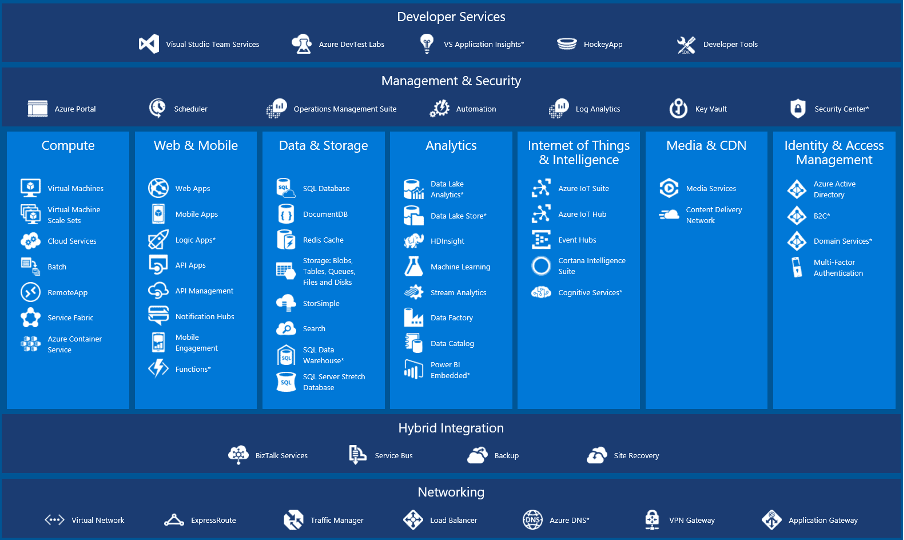
*image sourced from Google
Here are some key reasons why Azure is an attractive choice:
Comprehensive Services: Azure provides a vast array of services, including compute, storage, networking, databases, analytics, machine learning, artificial intelligence, Internet of Things (IoT), and more, enabling developers to build and deploy virtually any application or workload.
Integration with Microsoft Technologies: Azure seamlessly integrates with other Microsoft products and technologies, making it a natural fit for developers already familiar with the Microsoft ecosystem, such as .NET, Visual Studio, and SQL Server.
Hybrid Capabilities: Azure supports hybrid scenarios, allowing organizations to extend their on-premises infrastructure to the cloud, enabling seamless integration and workload portability across on-premises, cloud, and edge environments.
Robust Security and Compliance: Azure offers robust security features, including advanced threat protection, encryption, and identity and access management, helping organizations safeguard their applications and data. It also provides compliance certifications for various industry standards and regulations.
Global Footprint and Availability: Azure has a massive global footprint, with data centers in over 60 regions worldwide, enabling organizations to deliver low-latency experiences to users globally and meet data residency requirements.
Open Source Support: Azure embraces open-source technologies, providing support for various open-source languages, frameworks, and tools, enabling developers to leverage their existing skills and toolsets.
DevOps and Automation: Azure seamlessly integrates with popular DevOps tools and practices, enabling continuous integration, deployment, and automated delivery pipelines, accelerating software delivery and improving collaboration.
Throughout this series, we’ll dive deeper into the various Azure services and explore how developers can leverage them to build, deploy, and manage modern, scalable, and secure applications. Whether you’re a seasoned developer or just starting your cloud journey, this series will equip you with the knowledge and skills necessary to navigate the Azure ecosystem and unlock its full potential, empowering you to drive innovation and business growth in the cloud computing era.



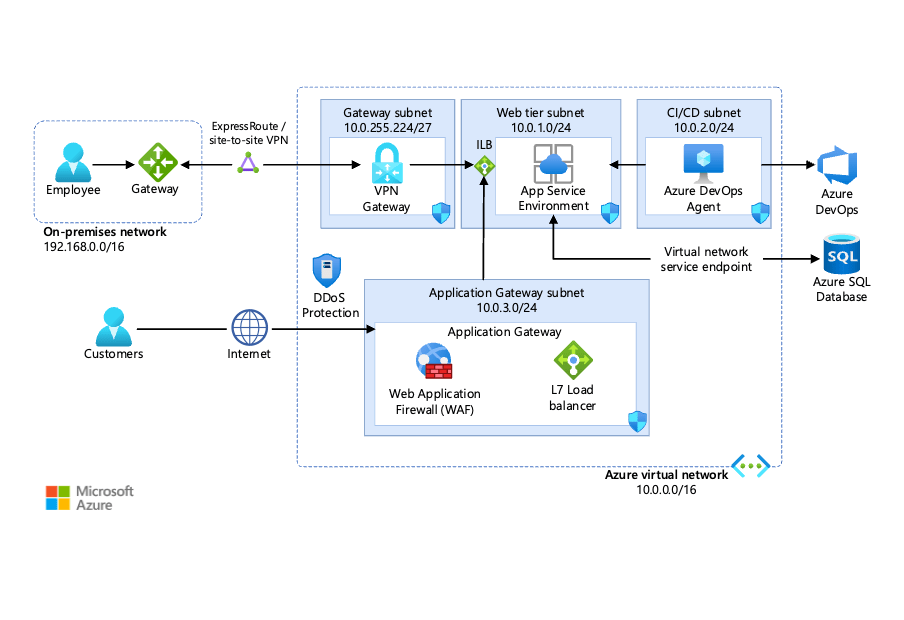
 *image sourced from Google




 Deepak Kaushik -> Cloud Blooded Beast