Category Archives: April 2018

Unlocking the Power of Azure Gen AI and ML: A Comprehensive Curriculum

Introduction:

In the rapidly evolving landscape of artificial intelligence and machine learning, staying abreast of the latest technologies and tools is crucial. Azure Gen AI and ML, offered by Microsoft, provide a cutting-edge platform for developers and data scientists to harness the potential of generative AI. As I delved into the realm of Azure Gen AI and ML, I discovered a rich curriculum that serves as a roadmap for mastering these transformative technologies. In this blog post, I am excited to share this curated curriculum to help a larger audience embark on their journey of mastering Azure Gen AI and ML.

Foundational Training:

  1. Python 101 for Beginners:
  • Resource Link: Python for Beginners
  • Python is the backbone of many AI and ML applications. This beginner-friendly course provides a solid foundation for understanding Python, a language widely used in the world of data science.
  1. Introduction to AI on Azure:
  • Resource Link: Get started with AI on Azure
  • This module introduces fundamental concepts of AI and provides hands-on experience with AI tools on the Azure platform.
  1. Introduction to Generative AI:
  • Resource Link: Introduction to Generative AI
  • Gain insights into generative AI, a revolutionary approach that empowers machines to create new content, images, and more.
  1. Introduction to GitHub Copilot for Business:

Azure Open AI Training:

  1. Develop Generative AI Solutions with Azure OpenAI Service:
  1. Work with Generative AI Models in Azure Machine Learning:
  1. Build Natural Language Solutions with Azure OpenAI Service:
  1. Introduction to Prompt Engineering:
  1. Apply Prompt Engineering with Azure OpenAI Service:

Advanced Concepts:

  1. LLM AI Embeddings with LangChain, Semantic Kernel, and Vector DB:
  1. LangChain for LLM Application Development:
  2. LangChain Chat with Your Data:
  3. Orchestrate your AI with Semantic Kernel:

Conclusion:

Mastering Azure Gen AI and ML opens the doors to a world of possibilities. The provided curriculum offers a comprehensive learning path, covering foundational concepts to advanced techniques. As you navigate through these resources, you’ll acquire the skills and knowledge needed to leverage the full potential of Azure Gen AI and ML. Whether you’re a beginner or an experienced professional, this curriculum serves as a valuable guide for anyone looking to enhance their proficiency in the dynamic field of artificial intelligence and machine learning.
Azure Dev Series: Containerization and Kubernetes in Azure

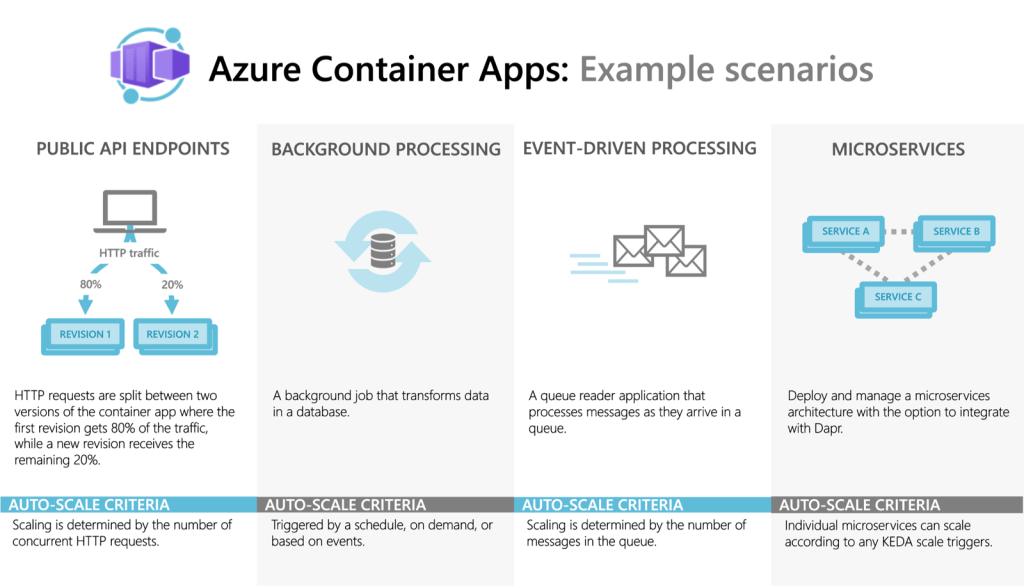
In today’s rapidly evolving application landscape, containerization and container orchestration have become essential technologies for enabling agility, scalability, and portability. Azure provides comprehensive support for containerization and offers a fully managed Kubernetes service, Azure Kubernetes Service (AKS), enabling developers and IT professionals to deploy and manage containerized applications at scale.

Understanding Containerization:

*image sourced from Google

Containerization is a virtualization approach that packages applications and their dependencies into isolated, lightweight, and portable containers. Containers share the host operating system kernel, enabling efficient resource utilization and consistent application behavior across different environments. Key benefits of containerization include:

1. Portability: Containers encapsulate the entire application runtime environment, ensuring consistent behavior across different hosting platforms and environments.

2. Isolation: Each container runs in an isolated environment, preventing conflicts with other containers or the host system, and ensuring secure and reliable application execution.

3. Efficiency: Containers share the host operating system kernel, resulting in more efficient resource utilization compared to traditional virtual machines.

4. Scalability: Containers can be easily scaled horizontally by spinning up additional instances, enabling applications to handle fluctuating demand and traffic loads.

Azure Container Registry (ACR):

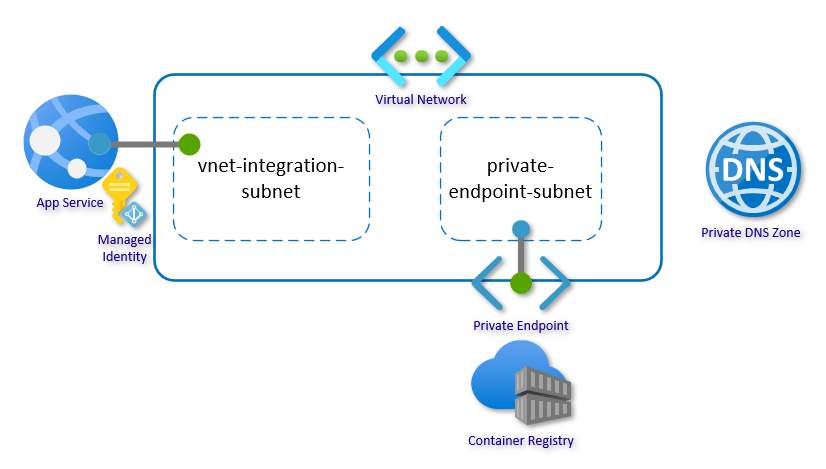
Azure Container Registry is a private, centralized registry for storing and managing container images. Key features of ACR include:

*image sourced from Google

1. Secure Image Storage: Store and manage Docker container images in a secure, private registry hosted in Azure.

2. Geo-Replication: Replicate container images across multiple Azure regions, ensuring high availability and low-latency access to images.

3. Vulnerability Scanning: Automatically scan container images for known vulnerabilities and misconfigurations, enabling proactive security measures.

4. Integrated CI/CD: Integrate ACR with Azure DevOps Services or other CI/CD pipelines for automated image building, testing, and deployment.

Azure Kubernetes Service (AKS):

*image sourced from Google

Azure Kubernetes Service (AKS) is a fully managed Kubernetes service that enables you to deploy, manage, and scale containerized applications efficiently. Key features of AKS include:

1. Simplified Provisioning: Rapidly provision Kubernetes clusters with automated configuration, updates, and scaling, reducing the operational overhead of managing Kubernetes.

2. Integrated Networking: Leverage Azure Virtual Networks and networking services to securely connect and manage communications between your AKS clusters and other Azure resources.

3. Advanced Scheduling: Utilize advanced scheduling capabilities, such as node pools, pod disruption budgets, and node auto-scaling, to optimize resource utilization and ensure high availability.

4. Monitoring and Logging: Integrate with Azure Monitor for comprehensive monitoring and logging of your AKS clusters, enabling proactive issue detection and troubleshooting.

5. Secure Deployments: Leverage Azure Active Directory for authentication and role-based access control (RBAC) to secure your AKS deployments and restrict access to authorized users and services.

Deploying Containerized Applications on Azure:

Azure provides various options for deploying and managing containerized applications, including Azure Kubernetes Service (AKS), Azure Container Instances (ACI), and Azure Web Apps for Containers. Here’s an overview of these services:

1. Azure Kubernetes Service (AKS): AKS is the recommended option for deploying and managing production-grade containerized applications at scale. It provides a fully managed Kubernetes environment, enabling you to leverage the power of Kubernetes for orchestrating and managing your containerized workloads.

2. Azure Container Instances (ACI): ACI is a serverless container offering that allows you to run containerized applications without provisioning and managing virtual machines or clusters. ACI is suitable for burst workloads, batch processing, and lightweight containerized applications that don’t require the full capabilities of Kubernetes.

3. Azure Web Apps for Containers: This service allows you to deploy and run containerized web applications on a fully managed platform as a service (PaaS) offering. It simplifies the deployment and scaling of containerized web apps while providing features like continuous deployment, custom domains, and SSL/TLS support.

Best Practices for Containerization and Kubernetes in Azure:

To effectively leverage containerization and Kubernetes in Azure, it’s essential to follow best practices and adopt a DevOps mindset:

1. Embrace DevOps and CI/CD: Implement DevOps practices and continuous integration and deployment (CI/CD) pipelines to automate the build, testing, and deployment of containerized applications, ensuring consistency and reliability.

2. Implement Infrastructure as Code (IaC): Define and manage your container infrastructure as code using tools like Azure Resource Manager templates or Terraform, enabling version control, repeatable deployments, and consistent environments.

3. Utilize Managed Services: Leverage fully managed services like Azure Kubernetes Service (AKS) and Azure Container Registry (ACR) to reduce operational overhead and benefit from automated updates, scaling, and security features.

4. Monitor and Observe: Implement comprehensive monitoring and observability practices for your containerized applications and Kubernetes clusters, leveraging tools like Azure Monitor, Prometheus, and Grafana to gain insights into application performance, resource utilization, and potential issues.

5. Secure Container Deployments: Implement security best practices, such as using private container registries, network isolation, RBAC, and vulnerability scanning, to protect your containerized applications and Kubernetes clusters from potential threats.

6. Optimize Resource Utilization: Leverage advanced scheduling capabilities in Kubernetes, such as node pools, auto-scaling, and resource quotas, to optimize resource utilization and ensure efficient and cost-effective container deployments.

7. Plan for Scalability and High Availability: Design your containerized applications and Kubernetes clusters with scalability and high availability in mind, utilizing features like load balancing, replication, and geo-replication to handle fluctuating demand and ensure application uptime.

By embracing containerization and Kubernetes in Azure, developers and organizations can unlock the benefits of agility, scalability, and portability, enabling them to build and deploy modern, cloud-native applications more efficiently and effectively.

Enhancing Azure Application Performance: A Guide to Monitoring and Optimization

In the rapidly evolving landscape of cloud computing, efficient application performance is paramount for businesses seeking to stay competitive. Azure, Microsoft’s cloud platform, offers a comprehensive suite of tools for application monitoring and performance optimization. In this blog post, we’ll explore some key strategies and tools available on Azure for monitoring and optimizing application performance, along with a real-time example to illustrate their practical application.

Why Monitoring and Optimization Matter

Before delving into specific tools and strategies, let’s briefly discuss why monitoring and optimization are crucial for Azure applications.

  1. Cost Efficiency: Optimized applications consume fewer resources, resulting in lower operational costs.
  2. Enhanced User Experience: Applications with better performance provide a smoother and more satisfying user experience, leading to higher customer satisfaction and retention.
  3. Identifying and Resolving Issues: Monitoring helps detect performance bottlenecks and potential issues before they escalate, enabling proactive problem-solving.

Azure Monitoring Tools

Azure Monitor

Azure Monitor provides comprehensive monitoring solutions for Azure resources. It collects and analyzes telemetry data from various sources, including applications, infrastructure, and networks. Key features include:

  • Metrics: Collects and visualizes performance metrics such as CPU usage, memory utilization, and response times.
  • Logs: Aggregates log data from Azure resources, allowing for advanced querying and analysis.
  • Alerts: Configurable alerts notify administrators of abnormal conditions or performance thresholds.

Application Insights

Application Insights is an application performance management (APM) service that helps developers monitor live applications. It provides deep insights into application performance and usage patterns, including:

  • Performance Monitoring: Identifies slow response times, dependencies, and resource usage.
  • Application Diagnostics: Captures exceptions, traces, and dependencies, aiding in debugging and troubleshooting.
  • User Analytics: Tracks user interactions and behavior, enabling developers to optimize user experiences.

Azure Advisor

Azure Advisor offers personalized recommendations to optimize Azure resources for performance, security, and cost-efficiency. It analyzes usage patterns and configurations to provide actionable insights, such as:

  • Performance Recommendations: Suggests optimizations to improve application performance and reduce latency.
  • Cost Optimization: Recommends rightsizing virtual machines, resizing storage, and adopting cost-effective services.
  • Security Best Practices: Provides guidance on implementing security controls and compliance standards.

Real-Time Example: E-Commerce Application Optimization

Let’s consider a real-world scenario of optimizing an e-commerce application deployed on Azure. Our goal is to enhance performance while minimizing operational costs.

Monitoring Phase:

  1. Instrumentation: Integrate Application Insights into the e-commerce application to collect telemetry data.
  2. Metrics Collection: Configure Azure Monitor to collect performance metrics for virtual machines, databases, and web services.
  3. Baseline Establishment: Establish baseline performance metrics to identify deviations and anomalies.

Optimization Phase:

  1. Resource Scaling: Use Azure Advisor recommendations to rightsize virtual machines and databases based on historical usage patterns.
  2. Caching: Implement Azure Cache for Redis to cache frequently accessed data, reducing database load and improving response times.
  3. Content Delivery Network (CDN): Utilize Azure CDN to cache static content such as images and scripts, reducing latency for global users.
  4. Load Balancing: Configure Azure Load Balancer to distribute traffic evenly across multiple instances, improving scalability and fault tolerance.

Conclusion

In conclusion, Azure offers powerful tools and services for monitoring and optimizing application performance. By leveraging Azure Monitor, Application Insights, and Azure Advisor, businesses can gain valuable insights into their applications’ health and performance, leading to enhanced user experiences and cost savings. Incorporating these monitoring and optimization practices into your Azure deployments will ensure that your applications remain efficient, resilient, and responsive in today’s dynamic cloud environment.

Image Source: Azure Documentation

By adopting a proactive approach to monitoring and optimization, businesses can stay ahead of performance issues and deliver exceptional experiences to their users.

Azure Dev Series: DevOps in Azure, Continuous Integration and Deployment

In the fast-paced world of software development, adopting DevOps practices has become crucial for delivering high-quality applications faster and more efficiently. Azure provides a comprehensive set of services and tools that enable developers and IT professionals to implement DevOps principles, streamline their development lifecycle, and achieve continuous integration and deployment (CI/CD).

Azure DevOps Services: Azure DevOps is a suite of services that provides an end-to-end solution for collaborative development, version control, agile planning, and CI/CD pipelines. Key components include:

*image sourced from Google

  1. Azure Repos: A centralized source control system that supports Git repositories for version control and collaboration.
  2. Azure Boards: A powerful agile project management tool that supports Kanban and Scrum methodologies, enabling teams to plan, track, and manage their work effectively.
  3. Azure Pipelines: A cloud-based CI/CD service that enables automated build, testing, and deployment processes for various target environments (Azure, on-premises, or third-party clouds).
  4. Azure Test Plans: A comprehensive testing solution that supports manual and exploratory testing, enabling teams to define and execute test plans and capture results.
  5. Azure Artifacts: A centralized package management service that enables teams to share and consume packages, such as NuGet, npm, and Maven, across projects and pipelines.

Implementing Continuous Integration (CI): Continuous Integration (CI) is a DevOps practice that involves frequently integrating code changes from multiple developers into a central repository, triggering automated builds and tests to detect issues early in the development cycle. Azure DevOps Services and other Azure services can help streamline the CI process:

*image sourced from Google

  1. Source Control Management: Use Azure Repos or integrate with other Git repositories (e.g., GitHub, Bitbucket) to manage your source code and collaborate with team members.
  2. Automated Builds: Configure Azure Pipelines to automatically trigger builds whenever code changes are committed to the repository, ensuring that the latest code is continuously built and tested.
  3. Automated Testing: Integrate unit, integration, and functional tests into your CI pipeline, automatically executing tests with every code commit to catch defects early and maintain code quality.
  4. Dependency Management: Leverage Azure Artifacts to manage and share packages and dependencies across your projects and pipelines, ensuring consistent and reliable builds.
  5. Code Quality Analysis: Integrate static code analysis tools (e.g., SonarQube, CodeCov) into your CI pipeline to enforce coding standards, identify code quality issues, and maintain technical debt.

Enabling Continuous Deployment (CD): Continuous Deployment (CD) is a DevOps practice that involves automatically deploying tested and validated software changes to production (or other target environments) with minimal manual intervention. Azure provides various services and tools to support CD:

  1. Release Pipelines: Configure Azure Pipelines to define release pipelines that automate the deployment process, including approvals, environment configurations, and rollback strategies.
  2. Deployment Targets: Deploy to various targets, such as Azure App Services, Azure Kubernetes Service (AKS), Azure Virtual Machines, or on-premises infrastructure, using deployment tasks and agents.
  3. Infrastructure as Code (IaC): Use Azure Resource Manager templates, Terraform, or other IaC tools to define and manage your infrastructure configurations as code, enabling consistent and repeatable deployments.
  4. Feature Flags: Leverage Azure App Configuration or other feature flag management solutions to control the rollout of new features and enable safe deployments with gradual rollouts or canary releases.
  5. Monitoring and Feedback Loops: Integrate Application Insights, Azure Monitor, and other monitoring tools to gather feedback from production environments, enabling continuous improvement and rapid issue detection and resolution.

Optimizing DevOps Practices in Azure: To fully realize the benefits of DevOps and achieve efficient CI/CD pipelines in Azure, it’s essential to follow best practices and leverage various Azure services:

  1. Embrace Automation: Automate as many processes as possible, including builds, testing, deployments, and infrastructure provisioning, to reduce manual effort and improve consistency and reliability.
  2. Implement Infrastructure as Code (IaC): Define and manage your infrastructure configurations as code using Azure Resource Manager templates, Terraform, or other IaC tools, enabling version control, repeatable deployments, and consistent environments.
  3. Leverage Containerization: Adopt containerization technologies like Docker and Kubernetes to package and deploy your applications consistently across different environments, enabling portability and scalability.
  4. Implement Secure DevOps: Incorporate security practices throughout the development lifecycle, including secure coding practices, automated security testing, and continuous monitoring of deployed applications.
  5. Enable Collaboration and Visibility: Foster collaboration and transparency by leveraging Azure Boards for agile planning, Azure Repos for source control management, and Azure Pipelines for sharing CI/CD pipelines across teams.
  6. Embrace Continuous Learning: Continuously learn and improve by gathering feedback from production environments, analyzing metrics and telemetry data, and incorporating lessons learned into future iterations of your DevOps processes.

Throughout this article, we’ve explored the various Azure services and tools that enable DevOps practices, continuous integration, and continuous deployment. By adopting these practices and leveraging Azure’s capabilities, development teams can streamline their delivery processes, improve collaboration, and accelerate the delivery of high-quality software to end-users.

Streamlining Business Processes with Azure Integration and Messaging

In today’s dynamic business landscape, the ability to integrate disparate systems and communicate seamlessly across various platforms is crucial for maintaining competitiveness and driving innovation. Azure Integration and Messaging services offer a robust platform for businesses to connect applications, data, and services both within the organization and with external partners. In this blog post, we’ll explore the significance of Azure Integration and Messaging with real-world examples, along with a sample diagram illustrating its architecture and a practical application scenario.

The Importance of Azure Integration and Messaging

Azure Integration and Messaging services provide a comprehensive suite of tools and services to facilitate communication and integration between different applications, services, and systems. Whether it’s connecting legacy on-premises systems with cloud-based applications, enabling real-time data exchange between various endpoints, or orchestrating complex business processes, Azure offers a range of solutions to meet diverse integration needs.

Real-World Example: E-commerce Order Processing

Let’s consider an example of an e-commerce company that relies on multiple systems and services to manage its operations, including order processing, inventory management, and customer relationship management (CRM). Efficient communication and integration between these systems are essential for delivering a seamless experience to customers and ensuring smooth business operations.

Architecture Diagram:

Azure Integration Architecture Diagram

In the above diagram, we illustrate a simplified architecture leveraging Azure Integration and Messaging services for e-commerce order processing:

  1. Order Placement: When a customer places an order through the e-commerce website, the order details are captured and sent to Azure Service Bus Queue for processing.
  2. Order Processing: Azure Logic Apps, a serverless workflow automation platform, monitors the Service Bus Queue for new orders. Upon receiving an order, Logic Apps triggers a series of actions, including inventory verification, payment processing, and order fulfillment.
  3. Inventory Management: Azure Functions are used to interact with the inventory management system, updating inventory levels in real-time based on the processed orders.
  4. Payment Processing: Payment information is securely transmitted to the payment gateway using Azure API Management, ensuring compliance with industry standards and regulations.
  5. Order Fulfillment: Once payment is confirmed and inventory is available, Azure Logic Apps triggers the fulfillment process, which may involve generating shipping labels, updating order status, and sending notifications to customers.
  6. CRM Integration: Completed orders are synchronized with the CRM system using Azure Event Grid, enabling customer service representatives to access up-to-date order information and provide timely support to customers.

Conclusion

Azure Integration and Messaging services play a vital role in enabling seamless communication and integration across diverse systems and services, empowering businesses to streamline operations, enhance customer experiences, and drive digital transformation. By leveraging Azure’s robust platform and comprehensive set of tools, organizations can overcome integration challenges and unlock new opportunities for innovation and growth.

Incorporating Azure Integration and Messaging into your business processes can yield significant benefits, from increased efficiency and agility to improved customer satisfaction and competitive advantage. Whether you’re a small startup or a large enterprise, Azure provides the scalability, reliability, and flexibility needed to meet your integration needs and adapt to changing business requirements.

If you’re interested in exploring how Azure Integration and Messaging can transform your business, feel free to reach out to our team for personalized guidance and support. Together, we can embark on a journey to unlock the full potential of your digital ecosystem and drive success in the digital age.

Azure Dev Series: Monitoring and Troubleshooting Azure Applications

*image sourced from Google

As applications become increasingly complex and distributed, effective monitoring and troubleshooting are essential for ensuring optimal performance, availability, and user experience. Azure provides a comprehensive suite of monitoring and diagnostics tools that enable developers and IT professionals to gain insights into their applications, proactively detect and resolve issues, and optimize resource utilization.

Azure Monitor: Azure Monitor is a centralized monitoring service that collects and analyzes telemetry data from various Azure resources, applications, and on-premises environments. Key features of Azure Monitor include:

  1. Application Insights: Gain deep insights into the performance, availability, and usage of your web and mobile applications by integrating Application Insights into your development lifecycle.
  2. Log Analytics: Collect, analyze, and query log data from various sources, including Azure resources, on-premises systems, and third-party services, enabling advanced log analytics and troubleshooting.
  3. Metrics and Alerts: Monitor and visualize performance metrics for your Azure resources, and configure alerts to proactively notify you of potential issues or violations of predefined thresholds.
  4. Workbooks: Create interactive and customizable reports and dashboards using Azure Monitor Workbooks, combining data from multiple sources for comprehensive monitoring and analysis.

Azure Service Health: Azure Service Health is a suite of services that provides personalized guidance and support for monitoring the health and availability of Azure services and resources.

*image sourced from Google

  1. Azure Status: Stay informed about the current and historical health status of Azure services, planned maintenance activities, and service advisories.
  2. Service Health: Get personalized notifications and guidance when Azure service issues or planned maintenance activities might affect your resources.
  3. Resource Health: Identify and troubleshoot issues affecting specific Azure resources within your subscriptions.

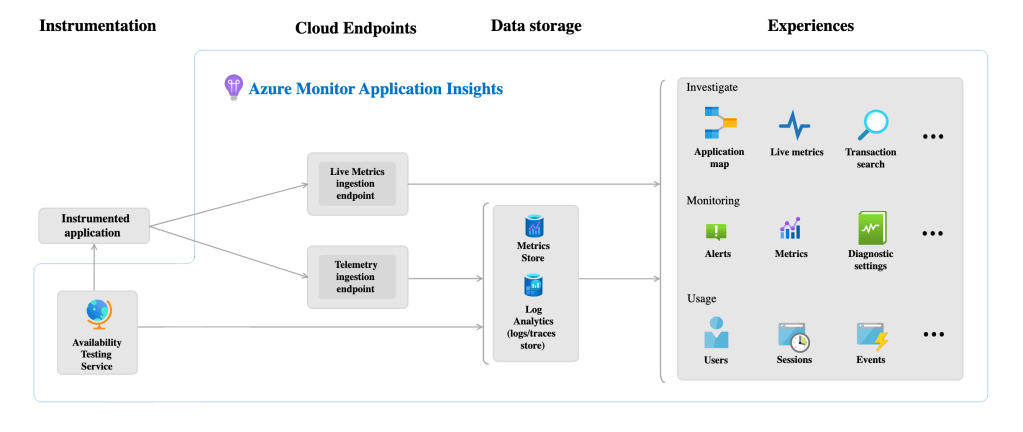
Application Insights: Application Insights is a comprehensive application performance monitoring (APM) solution that enables you to monitor the availability, performance, and usage of your applications, regardless of their hosting environment (Azure, on-premises, or hybrid).

*image sourced from Google

Key features include:

  1. Distributed Tracing: Gain end-to-end visibility into distributed applications by tracing requests across multiple components and services.
  2. Live Metrics: Monitor real-time performance metrics, such as response times, failure rates, and resource utilization, enabling proactive issue detection and resolution.
  3. Usage Analysis: Understand user behavior and application usage patterns through detailed analytics and visualization tools.
  4. Failure Diagnostics: Automatically capture and analyze exceptions, crashes, and other failure data for root cause analysis and remediation.

Azure Monitor for Containers: For containerized applications running on Azure Kubernetes Service (AKS) or other Kubernetes environments, Azure Monitor for Containers provides comprehensive monitoring and troubleshooting capabilities:

  1. Container Insights: Gain visibility into the performance and health of your containerized applications and the underlying Kubernetes infrastructure.
  2. Live Metrics: Monitor real-time metrics for containers, nodes, and control plane components, enabling proactive issue detection and resolution.
  3. Log Analytics: Collect and analyze container logs, events, and Kubernetes resource logs for troubleshooting and auditing purposes.
  4. Workload Health: Visualize the health and resource utilization of your containerized workloads, including replicas, pods, and containers.

Monitoring and Troubleshooting Best Practices: To effectively monitor and troubleshoot your Azure applications, it’s essential to follow best practices and implement a comprehensive monitoring strategy:

  1. Instrument Your Applications: Integrate monitoring instrumentation into your applications from the early stages of development to capture telemetry data and gain insights into application behavior.
  2. Centralize Monitoring: Consolidate monitoring data from various sources (applications, infrastructure, and third-party services) into a centralized platform like Azure Monitor for comprehensive visibility and analysis.
  3. Define Monitoring Metrics: Identify and define the key performance indicators (KPIs) and metrics that are most relevant to your applications and business objectives.
  4. Establish Baselines and Thresholds: Establish baselines for normal application behavior and define appropriate thresholds for alerts and notifications.
  5. Automate Monitoring and Alerting: Leverage automation and configuration management tools to streamline monitoring and alerting processes, ensuring consistent and scalable monitoring across your Azure environment.
  6. Implement Proactive Monitoring: Shift from reactive to proactive monitoring by analyzing historical data, identifying patterns, and predicting potential issues before they occur.
  7. Continuous Improvement: Regularly review and refine your monitoring strategy, incorporating feedback from stakeholders and lessons learned from past incidents.

Throughout this article, we’ve explored the various monitoring and troubleshooting tools and services provided by Azure, highlighting their capabilities in ensuring the performance, availability, and reliability of your applications. In the following articles, we’ll dive deeper into specific monitoring scenarios, advanced troubleshooting techniques, and practical examples of implementing comprehensive monitoring strategies on Azure.

Ensuring Azure Security and Compliance in a Cloud-Native World

In today’s rapidly evolving digital landscape, organizations are increasingly embracing cloud-native architectures to drive innovation, scalability, and agility. Microsoft Azure provides a robust platform for building and deploying cloud-native applications. However, as businesses migrate their workloads to the cloud, ensuring security and compliance becomes paramount. In this blog post, we’ll explore how Azure offers a comprehensive set of tools and services to address security and compliance challenges in the cloud-native environment, accompanied by real-time examples, diagrams, and illustrations.

1. Understanding Azure Security and Compliance

Azure offers a range of built-in security features and compliance certifications to help organizations safeguard their data and meet regulatory requirements. These include:

  • Azure Security Center: Azure Security Center provides unified security management and advanced threat protection across hybrid cloud workloads. It continuously monitors resources, identifies threats, and provides actionable recommendations to enhance security posture.
  • Azure Sentinel: Azure Sentinel is a cloud-native security information and event management (SIEM) service that uses AI to detect and respond to threats across the enterprise. It aggregates data from various sources, including Azure resources, on-premises environments, and third-party solutions, to provide a holistic view of the security landscape.
  • Azure Policy: Azure Policy enables organizations to enforce compliance with corporate standards and regulatory requirements. It allows administrators to define and enforce policies that govern resource configurations and access controls, ensuring adherence to best practices and regulatory guidelines.

2. Real-Time Example: Securing a Cloud-Native Application

Let’s consider a scenario where a company is developing a cloud-native e-commerce application on Azure. To ensure security and compliance:

  • Network Security: Utilize Azure Firewall to control traffic between application components and external networks. Configure network security groups (NSGs) to restrict access to specific IP addresses and ports.
  • Identity and Access Management (IAM): Implement Azure Active Directory (Azure AD) for centralized identity management and authentication. Use role-based access control (RBAC) to assign granular permissions to users and services based on their roles and responsibilities.
  • Data Encryption: Encrypt sensitive data at rest and in transit using Azure Key Vault and Azure Disk Encryption. Utilize Azure Information Protection to classify and protect data based on its sensitivity level.

3. Ensuring Compliance with Regulatory Requirements

In addition to security, compliance with industry-specific regulations such as GDPR, HIPAA, and PCI DSS is critical for many organizations. Azure offers a range of compliance certifications and regulatory frameworks to help customers meet their compliance obligations. These include:

  • GDPR Compliance: Azure provides tools and services to help customers comply with the General Data Protection Regulation (GDPR), including data encryption, audit logs, and data residency options.
  • HIPAA Compliance: Azure offers a HIPAA-compliant cloud platform that meets the stringent requirements for protecting healthcare data. Customers can leverage Azure services such as Azure SQL Database and Azure Cosmos DB for HIPAA-compliant data storage and processing.

4. Sample Diagram: Azure Security and Compliance Architecture

Azure Security and Compliance Architecture Diagram

[Insert description of the diagram]

5. Conclusion

In conclusion, ensuring security and compliance in a cloud-native environment is essential for organizations leveraging Azure for their digital transformation initiatives. By leveraging the comprehensive security and compliance features offered by Azure, businesses can build and deploy cloud-native applications with confidence, knowing that their data is protected and regulatory requirements are met.

With Azure Security Center, Azure Sentinel, Azure Policy, and other robust tools and services, organizations can mitigate risks, detect threats, and enforce compliance across their cloud environments. By adopting a proactive approach to security and compliance, businesses can harness the full potential of cloud-native technologies while minimizing the associated risks.

By embracing Azure’s security and compliance capabilities, organizations can navigate the complexities of the cloud-native world with confidence, driving innovation and growth while safeguarding their most valuable assets.

Azure Dev Series: Securing Azure Applications and Data

*image sourced from Google

In today’s digital landscape, where cyber threats are ever-evolving, ensuring the security of your applications and data is of paramount importance. Azure offers a comprehensive set of security services and features that enable developers to build secure, compliant, and resilient applications while safeguarding their data from potential threats.

Identity and Access Management: Azure Active Directory (Azure AD) is a cloud-based identity and access management service that provides secure and centralized authentication and authorization for your applications and resources. Key features include:

  1. Single Sign-On (SSO): Enable SSO across your cloud and on-premises applications, providing a seamless and secure user experience.
  2. Multi-Factor Authentication (MFA): Implement MFA for added security, requiring users to provide an additional form of authentication beyond their username and password.
  3. Conditional Access: Define and enforce access policies based on various conditions, such as user location, device health, and risk assessment.
  4. Role-Based Access Control (RBAC): Grant and manage access to Azure resources based on predefined roles, ensuring the principle of least privilege.

Data Protection and Encryption: Azure provides several services and features to protect your data at rest and in transit, ensuring confidentiality and compliance with industry standards and regulations.

  1. Azure Key Vault: Securely store and manage cryptographic keys, secrets, and certificates used for encrypting your data and applications.
  2. Azure Disk Encryption: Encrypt your virtual machine disks and data at rest using industry-standard encryption algorithms and keys stored in Azure Key Vault.
  3. Azure Storage Service Encryption: Automatically encrypt your data in Azure Storage (Blob, File, Queue, and Table) before it’s stored, providing data at rest encryption.
  4. Azure SQL Database Encryption: Encrypt your SQL databases using Transparent Data Encryption (TDE) and Bring Your Own Key (BYOK) capabilities.

Network Security: Azure provides a range of network security services and features to secure your application traffic and protect against unauthorized access and threats.

  1. Azure Virtual Network: Create logically isolated networks in the cloud and control network traffic using network security groups and route tables.
  2. Azure Firewall: Implement a cloud-based, stateful firewall service to secure your application traffic and protect against threats.
  3. Azure DDoS Protection: Safeguard your applications against distributed denial of service (DDoS) attacks with Azure’s built-in DDoS protection service.
  4. Azure Web Application Firewall (WAF): Protect your web applications from common web vulnerabilities and threats, such as SQL injection, cross-site scripting (XSS), and other OWASP top 10 threats.

Security Monitoring and Threat Detection: Azure offers robust security monitoring and threat detection services to help you proactively identify and respond to potential security risks and incidents.

  1. Azure Security Center: A unified security management system that provides advanced threat protection, security policy management, and continuous monitoring for your Azure resources.
  2. Azure Sentinel: A cloud-native Security Information and Event Management (SIEM) solution that collects, analyzes, and correlates security data from various sources to detect and investigate threats.
  3. Azure Monitor: A comprehensive monitoring service that provides insights into the performance, availability, and security of your Azure resources and applications.

Implementing a Secure Azure Architecture: Building secure applications on Azure requires a multi-layered approach that encompasses various security controls and best practices. Here are some key considerations:

  1. Defense in Depth: Implement security controls at multiple layers, including network, application, data, and identity, to create a robust security posture.
  2. Least Privilege: Grant the minimum necessary permissions and access rights to users, applications, and services, following the principle of least privilege.
  3. Secure DevOps: Incorporate security practices throughout the development lifecycle, including secure coding practices, automated security testing, and continuous monitoring.
  4. Encryption and Key Management: Encrypt data at rest and in transit, and securely manage cryptographic keys using Azure Key Vault.
  5. Secure Networking: Implement network segmentation, firewalls, and secure connectivity options (e.g., VPNs, Express Route) to protect your applications and data.
  6. Monitoring and Auditing: Continuously monitor your resources and applications for security events, and enable auditing and logging to maintain a comprehensive security trail.
  7. Incident Response: Develop an incident response plan to effectively detect, investigate, and respond to security incidents in a timely and coordinated manner.

Throughout this article, we’ve explored the various security services and features offered by Azure, highlighting their capabilities in protecting your applications, data, and infrastructure from potential threats. In the following articles, we’ll dive deeper into best practices, security hardening techniques, and practical examples of implementing secure architectures on Azure.

Driving Innovation: Insights from Canadian MVP Show Lead’s Talks on Azure, Fabric, and Azure AI

Driving Innovation: Insights from Canadian MVP Show Lead’s Talks on Azure, Fabric, and Azure AI

In the fast-evolving realm of cloud technology, the contributions of Microsoft Most Valuable Professionals (MVPs) play a pivotal role in driving innovation and shaping the industry landscape. As a Canadian MVP Show Lead deeply immersed in the Azure ecosystem, my recent discussions with fellow Microsoft Azure MVPs have shed light on the transformative power of Azure, Azure Fabric, and Azure AI in the years 2023-2024.

Unveiling Azure’s Potential

Azure, Microsoft’s cloud computing platform, continues to redefine possibilities for businesses worldwide. In my talks, we delved into Azure’s latest advancements, highlighting its scalability, reliability, and versatility in meeting diverse business needs. From infrastructure as a service (IaaS) to platform as a service (PaaS) and beyond, Azure’s comprehensive suite empowers organizations to innovate seamlessly, driving efficiency and agility across industries.

Harnessing the Power of Azure Fabric

Azure Fabric, a key component of Azure’s fabric-based computing environment, emerged as a focal point of our discussions. Its distributed systems architecture enables seamless scalability, fault tolerance, and high availability for mission-critical applications. As we explored real-world use cases and best practices, it became evident that Azure Fabric is instrumental in orchestrating complex workflows and ensuring optimal performance in dynamic cloud environments.

Empowering Insights with Azure AI

The integration of artificial intelligence (AI) capabilities within Azure has revolutionized data analytics, decision-making, and customer experiences. Azure AI’s suite of services, including machine learning, cognitive services, and Azure Bot Services, empowers organizations to extract actionable insights, automate processes, and deliver personalized interactions at scale. Our conversations underscored the transformative impact of AI-driven solutions across industries, from predictive maintenance in manufacturing to personalized recommendations in retail.

Collaborative Exchange and Innovation

The collaborative exchange among Microsoft Azure MVPs during these talks epitomizes the spirit of knowledge sharing and innovation within the MVP community. Our diverse perspectives, hands-on experiences, and deep technical insights enriched the discussions, paving the way for groundbreaking ideas and solutions leveraging Azure’s capabilities.

Looking Ahead: Embracing Future Possibilities

As we navigate the dynamic landscape of cloud technology, the conversations around Azure, Azure Fabric, and Azure AI serve as a catalyst for continuous learning, exploration, and innovation. The collective expertise of MVPs worldwide, coupled with Microsoft’s ongoing advancements in cloud services, propels organizations towards digital transformation and sustainable growth.

In conclusion, my engagements as a Canadian MVP Show Lead and dialogues with fellow Azure MVPs underscore the immense potential of Azure’s ecosystem in driving innovation, empowering businesses, and shaping the future of technology in 2023-2024 and beyond. Together, we embrace the opportunities ahead, harnessing the full spectrum of Azure’s capabilities to create impactful solutions and drive positive change in a rapidly evolving digital landscape.

Embracing Azure Cloud-Native Applications and Gen AI in Industry: Revolutionizing Business

In today’s rapidly evolving technological landscape, industries worldwide are continuously seeking innovative solutions to streamline operations, enhance efficiency, and drive growth. Two significant advancements in this pursuit are the adoption of Azure cloud-native applications and the integration of Generative Artificial Intelligence (Gen AI) technologies. Combining these powerful tools offers unparalleled opportunities for businesses to thrive in the digital age.

What are Azure Cloud-Native Applications?

Azure cloud-native applications are built specifically to leverage the scalability, reliability, and flexibility of the Microsoft Azure cloud platform. They are designed to run in a cloud environment, utilizing cloud-native services such as Azure Kubernetes Service (AKS), Azure Functions, Azure Cosmos DB, and Azure Logic Apps.

Example:

Consider a manufacturing company that aims to optimize its supply chain management. By migrating its legacy systems to Azure cloud-native applications, the company can implement real-time data analytics to track inventory levels, monitor production processes, and predict demand fluctuations. Through the seamless integration of Azure services, such as Azure IoT Hub for sensor data collection and Azure Machine Learning for predictive analytics, the company can achieve unprecedented levels of operational efficiency and agility.

Benefits of Azure Cloud-Native Applications:

  1. Scalability: Azure cloud-native applications can effortlessly scale up or down based on demand, ensuring optimal performance and cost-efficiency.
  2. Reliability: Leveraging Azure’s robust infrastructure, businesses can ensure high availability and reliability for their applications, minimizing downtime and maximizing uptime.
  3. Flexibility: Azure offers a wide range of cloud services and tools, allowing businesses to tailor their applications to meet specific requirements and adapt to changing market dynamics.

Integrating Gen AI into Azure Cloud-Native Applications:

Gen AI, or Generative Artificial Intelligence, refers to AI systems capable of creating content, designs, or solutions autonomously. By integrating Gen AI capabilities into Azure cloud-native applications, businesses can unlock new possibilities for innovation and creativity.

Example:

Imagine an e-commerce platform that utilizes Gen AI to personalize the user experience. By analyzing customer data, browsing history, and purchase patterns, the platform can generate personalized product recommendations in real-time. Moreover, by leveraging Azure’s powerful AI services, such as Azure Cognitive Services and Azure Machine Learning, the platform can continuously improve its recommendation algorithms, enhancing customer satisfaction and driving sales.

Benefits of Integrating Gen AI with Azure Cloud-Native Applications:

  1. Personalization: Gen AI enables businesses to deliver highly personalized experiences to their customers, increasing engagement and loyalty.
  2. Automation: By automating tasks such as content generation, design, and decision-making, businesses can streamline operations and free up resources for more strategic initiatives.
  3. Innovation: Gen AI empowers businesses to explore new creative possibilities and uncover insights that may not be apparent through traditional methods.

Real-World Impact:

The convergence of Azure cloud-native applications and Gen AI is poised to revolutionize industries across the globe. From manufacturing and healthcare to finance and retail, businesses of all sizes and sectors stand to benefit from these transformative technologies.

Key Changes in the Real World:

  1. Increased Efficiency: Businesses can streamline operations, automate repetitive tasks, and optimize resource allocation, leading to increased efficiency and productivity.
  2. Enhanced Customer Experience: Personalized experiences driven by Gen AI algorithms enable businesses to better understand and cater to customer needs, resulting in higher satisfaction and loyalty.
  3. Accelerated Innovation: The agility and flexibility of Azure cloud-native applications coupled with the creative potential of Gen AI foster a culture of innovation, enabling businesses to stay ahead of the competition and seize new opportunities.

In conclusion, the integration of Azure cloud-native applications and Gen AI represents a paradigm shift in how businesses operate and innovate in the digital age. By embracing these technologies, organizations can unlock untapped potential, drive growth, and shape the future of industry.