Category Archives: Microsoft Azure

Microsoft Foundry After Build 2026: Choose the Next Production Investment

An architecture review can absorb an entire release catalogue and still end without a decision. Build 2026 adds choices across agent development, hosting, tools, memory, and grounding. The useful question for an enterprise team is which change removes an observed obstacle in its own workload.

I would start with one accepted business task and trace where it fails today. Is the problem finding authoritative information, choosing an appropriate tool, recovering interrupted work, or proving that the result is correct? Each answer leads to a different investment.

Separate available capabilities from announced direction

The June 2 Foundry Build recap distinguishes stable developer components from preview services and future milestones. In particular, it describes Foundry Toolkit for VS Code as GA, memory and Toolboxes as preview, and hosted-agent GA as expected in early July. An expected date is a planning input, not a delivered production guarantee.

The Agent Service announcement presents a build, deploy, and operate approach. That is a useful way to organize responsibility, but it should not turn into a requirement to replace every component at once. Retain working parts of the application unless a change has a measurable benefit.

For each proposed capability, record the required feature, release status, deployment constraints, dependency owner, and acceptance evidence. A broad platform label cannot answer whether a specific preview integration is suitable for the application’s operating requirements.

Use the business bottleneck to choose a pilot

Consider a hypothetical equipment manufacturer whose support engineers prepare maintenance recommendations. The assistant currently retrieves manuals, checks equipment records, and drafts an explanation for an engineer. It struggles when manuals disagree and when an interrupted diagnostic sequence resumes.

If retrieval is the dominant failure, assess the grounding path first. Preserve document versions and test whether the correct evidence reaches the model. A richer agent runtime will not repair an index containing superseded maintenance instructions.

If failures arise after tool calls or restarts, assess orchestration and state recovery. If the assistant consistently knows the relevant information but omits required steps, procedural guidance or memory may deserve a controlled experiment.

This prioritization keeps the pilot small enough to interpret. Changing retrieval, memory, prompts, models, and hosting together can improve a score while leaving the team unable to explain why.

Read early memory results as research signals

The June 2 Agent Service post reports early Tau-bench absolute success-rate gains of 7–14 percentage points with procedural memory at near-baseline cost. This is Microsoft’s reported benchmark observation. It is not an enterprise-wide productivity estimate or a promise for the manufacturer’s support tasks.

The separate June 3 memory article reports about a 5% improvement in its STATE-Bench and Tau-Bench evaluations. It does not establish that this is the same configuration, denominator, or improvement measure as the earlier range. The two statements should not be combined into a single expected benefit.

That distinction matters in a business case. Use an external finding to justify testing a hypothesis, then measure the application under its own tasks, tools, and failure conditions. Approval for broad rollout should depend on that second result.

Define a comparison that can settle the decision

Freeze a baseline configuration and a representative task set. Include ordinary cases, ambiguous manuals, unavailable equipment records, and requests that should be escalated. Assign reviewers who understand the operational policy rather than asking a model to decide every question of correctness.

Compare the proposed capability against the baseline with equivalent input data and access. Keep failed and escalated tasks in the report. If an experiment excludes hard tasks, label that restriction and do not generalize the result to the whole service queue.

Measure accepted recommendations, missed mandatory checks, unsupported claims, elapsed resolution time, and cost per accepted result. Add a recovery test if the pilot changes runtime behavior. A successful happy-path demonstration cannot settle whether interrupted work is safe.

Make observability part of the pilot budget

The Build observability announcement distinguishes the tracing and evaluation foundation from new preview extensions, including multi-turn evaluation and trace replay. Record the specific surfaces used in the pilot and confirm their maturity separately.

My recommendation is to correlate each business task with model calls, retrieval, external actions, and the final review outcome. Capture enough configuration information to reproduce a failure, while keeping sensitive content out of routine telemetry unless it is deliberately required and controlled.

Include evaluation and human review in the cost calculation. A cheaper inference path can be more expensive overall if it causes additional review or repeat work. The business owner should see those costs alongside the quality result.

Keep the release decision reversible

A new dependency should have a fallback. For grounding, retain a known-good source configuration. For a model, retain the prior deployment while testing compatibility. For a workflow change, define how unfinished tasks are identified and completed without duplicate action.

Give the pilot an explicit exit condition. Examples include a material correctness improvement on a priority task class, a reduction in total handling effort, or recovery that meets an agreed operational objective. These are proposed acceptance categories, not claimed product outcomes.

If the experiment is inconclusive, keep the existing production path and revise the test. A release announcement does not create an obligation to adopt the feature immediately.

Put ownership beside each investment

The data owner should approve source quality and freshness. The application team should own workflow correctness. The platform team should own deployment and telemetry. Security and identity teams should verify access boundaries. The business sponsor should decide what improvement justifies the operating cost.

Ask each owner what evidence would make them comfortable with a wider release. Resolve incompatible expectations before the pilot starts. Otherwise a technically successful experiment can reach review with no agreed definition of production readiness.

For the next planning cycle, fund one constrained experiment with a baseline, accountable owners, and a rollback path. Foundry’s broader platform creates more ways to improve an application. The discipline is choosing the capability that addresses a demonstrated problem and proving its value before expanding.

References

Microsoft: Foundry Build Edition, June 2, 2026

Microsoft: Build and run agents at scale, June 2, 2026

Microsoft: Memory reliability and management, June 3, 2026

Microsoft: Observability and agent ROI, June 3, 2026

Foundry Agent Memory: Remember the Right Facts for the Right User

A returning customer says, “Use my usual delivery arrangement.” Remembering the preference could save a conversation. Remembering a previous customer’s arrangement could create a privacy incident. Remembering an outdated instruction could send an order to the wrong place.

Long-term memory makes an AI assistant more useful only when the application can distinguish a preference, a current fact, an old fact, and an authorization decision. The first implementation task is to define what each category means for the business.

Start with the feature that exists

Microsoft introduced memory in Foundry Agent Service in public preview in November 2025. The announcement describes extracting and retrieving user information and conversation summaries across interactions. That offers a managed foundation for continuity, with preview terms that teams need to evaluate before adopting it.

Keep the scope of that announcement clear. This design uses the documented memory concept and application controls; it does not assume that every retention, correction, or identity requirement is automatically solved by enabling memory.

The broader Agent Framework architecture provides orchestration and session building blocks. A workflow checkpoint, a conversation history, and a remembered customer preference serve different purposes. Treating them as one unstructured store makes retention and testing unnecessarily difficult.

The research argues for explicit evaluation

LongMemEval, introduced in 2024, uses 500 curated questions to examine long-term conversational memory. Its abstract reports an approximately 30% accuracy drop across sustained interactions in evaluated commercial assistants and long-context models. The benchmark tests extraction, cross-session reasoning, time, updates, and abstention. These findings describe its tested systems and conditions, not Foundry performance.

The older Lost in the Middle study also found that access to a long context did not ensure reliable use of relevant information, particularly when its position changed. A larger input window is therefore an option to evaluate, not proof that a memory problem has disappeared.

For an enterprise architect, the implication is practical. Test what the assistant recalls, when the remembered fact was true, and when it should decline to answer. Storage success alone is a weak acceptance criterion.

Separate business records from conversational memory

Imagine a hypothetical distributor using a support agent for repeat customers. The order-management system owns shipping addresses and account permissions. The memory layer might retain a preference for concise status summaries or a usual delivery-time discussion. It should not become an alternative system of record for the customer’s authorized receiving address.

For a new order, retrieve the current address from the authoritative system and ask for confirmation when the workflow requires it. The remembered preference can make the conversation smoother without bypassing the transaction’s normal validation.

This distinction also helps with data quality. If a customer says an address changed, the assistant can propose the appropriate account-update process. It should not silently write a conflicting address into memory and later present that as verified operational data.

Bind scope to authenticated identity

Derive memory scope from the application’s authenticated tenant and user identifiers. Never allow a natural-language request such as “use the profile for user123” to select a different person’s memory.

Decide how shared accounts work before launching. An account-level purchasing preference may be visible to a team, while a person’s accessibility preference should remain personal. Those are different scopes with different access rules.

Test isolation at retrieval and update boundaries. A successful test proves both that another user’s facts stay hidden and that the current user cannot overwrite them indirectly. Include tenant changes, reassigned accounts, and recycled application identifiers in the test plan.

Preserve origin and time

A useful memory item needs enough provenance to explain why it exists. My recommended record includes its source interaction, time recorded, applicable scope, fact type, and any validity period. Avoid retaining sensitive raw conversation content merely because it is convenient.

Represent corrections explicitly. If a customer first prefers phone calls and later requests email, retrieval should prioritize the current preference while respecting the chosen retention policy. A vague summary containing both statements leaves the model to guess which one governs.

Some memories should expire because the business meaning expires. A travel preference for a particular week is not a lifelong customer attribute. Where the chosen preview interface lacks a required lifecycle control, implement that control in the application or postpone that memory category.

Let users correct the assistant

Provide a practical way to inspect or challenge remembered information. “That is no longer correct” should trigger a defined correction path. The agent should acknowledge the change without promising deletion across every system unless the application has completed that operation.

Deletion needs its own verification. Check that removed information no longer appears through direct lookup, semantic retrieval, derived summaries, or copied application caches within the scope you control. Document any separately retained audit record and its purpose.

A support team also needs a way to investigate a disputed memory without unrestricted access to private conversations. Use narrowly scoped diagnostics and log metadata rather than exposing all remembered content by default.

Build a memory-specific test set

Create multi-session cases with known facts, deliberate corrections, similar customers, and questions with no answer in the history. Include temporal questions such as which instruction applied before a change.

Compare memory enabled and disabled on the same task set. Score correct recall, stale-fact use, unsupported recall, cross-user exposure, and appropriate abstention separately. An overall average can hide a serious isolation defect behind better preference recall.

Keep the retrieved memory items with the evaluation evidence when permitted. That lets engineers distinguish extraction failure from retrieval failure and reasoning failure. Changing the model when the wrong memory was retrieved may make the symptoms harder to reproduce.

Decide whether continuity is worth its cost

Measure avoided clarification turns and successful task completion alongside retrieval latency, storage, model calls, correction effort, and privacy operations. Use the business task as the denominator rather than the number of memories stored.

A sensible pilot begins with low-risk preferences in one authenticated application. Expand the scope after demonstrating useful recall, reliable correction, and effective separation between users.

The strongest memory design is selective. It remembers information with a clear purpose, retrieves it within the right identity boundary, and knows when a fresh business record or another question is more reliable.

References

Microsoft: Memory in Foundry Agent Service, November 25, 2025

Microsoft: Agent Framework architecture, February 19, 2026

Wu and colleagues: LongMemEval, 2024

Liu and colleagues: Lost in the Middle, 2023

Human Approval in Azure AI Agents: Make the Decision Survive the Wait

A service agent has diagnosed an incident and prepared a production change. The operations manager opens the approval request after lunch. By then, the deployment has changed, the original session has expired, and another engineer has already resolved part of the problem. What exactly does clicking Approve authorize?

That question belongs in the workflow design. A message asking for permission is only the visible part of approval. The application also needs a durable record of the proposed action, an authenticated decision, and a controlled path from that decision to execution. Otherwise a cautious user interface can sit on top of an unsafe transaction.

A durable pause is an architectural boundary

Microsoft’s February Foundry update describes a pattern combining Azure Durable Functions, Microsoft Agent Framework, and SignalR for workflows that wait for human input. The orchestrator can persist progress while an external approval event is pending. This is an application architecture pattern, rather than a claim that every Foundry agent automatically receives transaction-safe approvals.

The framework’s February release-candidate announcement documents checkpointing and human participation in graph-based workflows. By April, Microsoft had announced Agent Framework 1.0. Those building blocks help coordinate execution. The application still decides which person may approve a particular action and whether the action remains valid when work resumes.

For a production change, I would divide the flow into analysis, proposal, approval, validation, execution, and reconciliation. Each transition needs an explicit state. A conversational response such as “looks good” should become an approval only when the application can associate it with a specific proposal and authorized reviewer.

Measure the final state, not the conversation

The 2024 τ-bench paper evaluated tool-using agents through simulated user conversations, domain policies, and final database state. Its tested agents, including GPT-4o configurations, succeeded on fewer than 50% of tasks; retail reliability across eight trials, measured as pass^8, was below 25%. These are historical benchmark findings, not measurements of current Foundry models.

The useful lesson is methodological: an agent can sound cooperative and still leave the business system wrong. Approval testing should inspect the resulting record, including whether an unauthorized or duplicate change occurred. Testing only the wording of the approval question misses the outcome that matters.

What belongs in the approval record?

Consider a hypothetical service-management agent that proposes increasing capacity for one application. Its proposal should identify the environment, resource, current configuration, intended configuration, estimated financial effect, expiry time, and evidence used to recommend the change. This is an illustrative design, not a report of a client deployment.

Give the proposal an immutable identifier and a version. Store a canonical representation of its executable arguments. The approval decision references that version, rather than a mutable chat message. If the agent revises a target or parameter, require a new decision.

Capture the reviewer’s authenticated identity separately from model-generated text. A model may explain who should approve, but it must not establish that person’s authority. Authorization should be checked against the same identity and policy systems used by the application outside the AI workflow.

Make rejection and expiry ordinary terminal outcomes. Teams often implement the approval branch carefully and leave the other branches ambiguous. An expired request must not become an invitation for the agent to find a different route to execution.

Resume with fresh checks

A persisted workflow can resume correctly from its own perspective while the outside world has changed. Before applying the approved change, retrieve the current resource version and compare it with the proposal’s preconditions. Recheck permissions, policy constraints, and any material financial assumptions.

If those conditions differ, return a revised proposal for review. Do not silently reinterpret the previous approval as permission to achieve the same general goal by different means. The business owner approved one intervention under a particular set of facts.

Separate this validation from the language-model step. Deterministic application code should reject a mismatched resource version or expired approval. An explanatory prompt can help users understand the rejection; it should not be the enforcement mechanism.

Design the uncertain-outcome path

A tool call can time out after the downstream service has accepted a change. Blindly retrying risks a duplicate action. Assign an operation identifier before the write and use downstream idempotency support where available.

Where the target system lacks that support, implement a reconciliation query that checks the business record and operation evidence. Mark uncertain outcomes explicitly. A workflow waiting for reconciliation is more honest and easier to operate than an agent announcing success based on a missing response.

Keep the execution worker separate from proposal generation. Give it only the approved operation and necessary credentials. This limits the chance that unrelated conversation content influences a privileged write during recovery.

Test approval as a complete process

Build cases for approval after a restart, duplicate approval events, rejection followed by a late approval, revoked reviewer access, changed resource state, and timeout after a successful write. Include a hostile instruction inside retrieved incident data that asks the agent to bypass review.

For each case, specify both the expected workflow state and permitted downstream changes. Repeat tests because a single successful conversation does not establish consistent behavior. Preserve the failed cases as regression fixtures after correcting the implementation.

The platform team should own orchestration reliability. The application team should own transaction correctness and reconciliation. The business owner should define approval authority, expiry, and acceptable impact. Put those responsibilities in the runbook so an interrupted workflow has an accountable operator.

Report useful business measures

Track elapsed time from proposal to verified completion, reviewer correction rate, expired approvals, duplicate actions prevented, and unresolved outcomes. Separate time spent waiting for a person from time lost to technical recovery.

For an initial rollout, use a narrow action with a clear reversal procedure and observable final state. Compare the full process with the existing manual workflow, including review and recovery effort. An agent that drafts changes quickly but creates reconciliation work may increase the team’s workload.

The release decision should rest on whether the approved action is executed once, within its intended scope, under valid conditions. Durable orchestration makes the wait manageable. A precise approval contract makes the resulting action trustworthy.

References

Microsoft: February 2026 Foundry update

Microsoft: Agent Framework release candidate, February 19, 2026

Microsoft: Agent Framework 1.0 and the developer journey, April 22, 2026

Yao and colleagues: τ-bench, 2024

Foundry Hosted Agents: The Architecture Decisions Behind a Production Pilot

A procurement agent can read a supplier proposal, compare it with purchasing policy, and prepare a response. The hard question arrives when it starts writing files and calling business systems: whose data can it access, whose authority does it use, and what happens if a session fails halfway through? Those decisions belong in the architecture before a promising demonstration becomes a production pilot.

Microsoft’s April 22 hosted-agent announcement addressed part of that problem with a refreshed public-preview runtime: separate VM-isolated session sandboxes, persistent files across suspension, and compute that scales down when idle. It also described dedicated agent identities and support for different frameworks. These were launch capabilities, not evidence that a particular enterprise application had passed its own production acceptance tests.

Read the April release status precisely

The accompanying developer announcement distinguished stable Microsoft Agent Framework 1.0 and generally available Foundry Toolkit for VS Code from preview hosted agents, memory, and Toolboxes. It also separated the GA tracing foundation from preview hosted-agent tracing and custom evaluators. An SDK release and a managed service release are separate decisions; neither should substitute for checking the feature your application actually uses.

The April Toolbox announcement described reusable tool bundles exposed through an MCP-compatible endpoint. Its launch table emphasized Build and Consume, while broader Discover and Govern pillars were marked coming soon. My recommendation is to record each required control and its evidence individually. A platform’s governance direction is useful context; an implemented and verified control is what a release decision needs.

An illustrative procurement workflow

Consider a hypothetical manufacturer whose buyers review supplier quotes. This is a design example, not a customer implementation or a measured result. The initial agent reads an approved proposal, retrieves the current purchasing policy, identifies missing terms, and prepares a recommendation. A buyer approves the recommendation before a separate application submits any change to the purchasing system.

Keep the first pilot narrow: one business unit, one document type, a defined set of suppliers, and read access to a small collection of current policies. Exclude payment execution and supplier bank-detail updates from the initial tool set. A smaller action surface makes failures easier to interpret and gives the team a practical baseline for deciding whether additional autonomy is useful.

Separate the runtime boundary from the business boundary

Session isolation helps protect execution state. It does not establish which purchasing records the caller may see. I would require the application to derive the session’s business scope from authenticated identity, then enforce the same scope in every retrieval and API call. User-written text must never choose the tenant, buyer identity, or permission boundary.

DecisionRecommended pilot implementationEvidence to retain
Session scopeSeparate working directories and session identifiers by authenticated business scope.A negative test where one buyer requests another buyer’s material.
Tool accessExpose narrow operations such as reading a quote or preparing a change request.Tool schemas, authorization decisions, and rejected calls.
ApprovalBind approval to the exact supplier, record, proposed change, and version.Approved payload plus the approving user’s identity.
RecoveryUse a unique operation key for external writes and reconcile uncertain outcomes.An interrupted run that resumes without duplicate submissions.

These are proposed application controls, not claims that Foundry automatically implements this whole design. Define who owns each control: the identity team, platform team, application team, or business owner. If a control has no owner and no observable outcome, it is difficult to operate when the agent encounters an unusual request.

Treat files and tool calls as part of the transaction

A generated recommendation may contain outdated facts even when its file survives a restart. Record the policy version, source identifiers, retrieval time, and proposed transaction with the draft. Before the approved write executes, recheck that the purchasing record has not changed. If it has, return the proposal for review instead of applying approval to a different business situation.

Handle uncertain API results explicitly. A timeout can mean the request never arrived, or that the system completed it without returning a response. The agent should not resolve that ambiguity by repeatedly submitting the write. A reconciliation operation that checks the operation key and business record is more useful than a confident explanation of what probably happened.

Measure a complete task

For this pilot, I would measure the elapsed time from quote receipt to an accepted buyer recommendation, including review and correction. Add the percentage of recommendations accepted without material edits, policy violations missed, inappropriate disclosures, and interrupted runs recovered successfully. Token usage is an operating input; an accepted, correctly scoped recommendation is the business output.

Calculate cost per accepted recommendation using model calls, retrieval, active runtime, storage, monitoring, and human correction. Compare the result with a manual baseline on equivalent quotes. Keep difficult cases in the denominator, including declined and escalated requests. Otherwise, an attractive average can hide an agent that helps only when the work was already easy.

A practical release gate

My suggested sequence is to replay representative historical quotes with sensitive details removed, then test malicious instructions embedded in documents, expired sessions, permission changes, unavailable tools, and interruption after approval. Run a supervised pilot only after those cases have clear outcomes. Broader access should depend on observed quality and recoverability, not the size of the model or the smoothness of a demo.

The architectural value of a managed runtime is the opportunity to spend more attention on business correctness. Use that opportunity to define who can act, what approval authorizes, how interrupted work is reconciled, and what a successful task costs. Those decisions make the pilot useful to both the engineering team and the purchasing leader.

References

Microsoft: refreshed hosted agents, April 22, 2026
Microsoft: local-to-production developer journey, April 22, 2026
Microsoft: Toolbox launch scope, April 22, 2026

Reinforcement Fine-Tuning in Foundry: Prove the Grader Before Training the Model

When an enterprise assistant makes the same decision incorrectly, fine-tuning can look like the obvious next investment. First identify the failure. Did the model lack the current policy? Did the tool return incomplete data? Was the expected decision ambiguous? Or did the model repeatedly choose the wrong action despite having the evidence and instructions? Each diagnosis points to a different intervention.

Microsoft’s April 16 update expanded Global Training for o4-mini and introduced GPT-4.1, GPT-4.1-mini, and GPT-4.1-nano as additional model graders. It reported 13 launch regions and planned further expansion. I would treat that list as a dated announcement, not current capacity confirmation. The more important enterprise question is whether the reward used for training represents a decision the business actually wants.

Retrieval, prompting, and training solve different problems

Microsoft’s current fine-tuning overview explains that training changes model weights and does not replace retrieval for fresh information. It distinguishes supervised examples, preference pairs, and grader-based reinforcement signals. For an application team, the useful first step is to match the intervention to the observed failure rather than choosing the most sophisticated customization method.

Observed failureFirst intervention I would testReason
The answer uses an obsolete policy.Retrieve a versioned, current policy and check the retrieved evidence.Training is not a reliable policy-distribution mechanism.
A field is missing or malformed.Clarify the output contract and validate the response.A format problem may not require changing model weights.
The agent selects a wrong tool despite adequate context.Improve tool descriptions and run a controlled baseline before considering RFT.The action-selection failure needs a measurable test.
Reviewers disagree about the right outcome.Resolve the rubric with the business owner.Training on unresolved judgments can amplify inconsistency.

Use the same evaluation cases for your baseline and the proposed improvement. Change one intervention at a time where practical. If better retrieval eliminates the failure, the evidence favors improving retrieval. If a tuned model only appears better after changing the test set, the comparison cannot tell you which intervention helped.

A hypothetical service-dispatch example

Imagine a manufacturer whose assistant recommends whether a reported equipment fault should go to remote troubleshooting, routine dispatch, or urgent human review. The assistant receives a fault report and retrieved service guidance. It proposes a route and cites the supporting rule. This is an illustrative design, not an account of a client engagement.

The business owner must decide what makes that recommendation acceptable. Correctly identifying urgency matters more than writing an elegant explanation. A request with insufficient evidence should escalate. A customer sentence claiming to authorize bypassing the service policy should not change the policy. Those requirements should be explicit before collecting training examples.

Validate the grader as its own system

I would create a separate grader test set containing a correct recommendation, an incorrect recommendation with persuasive wording, a missing-evidence escalation, an invented citation, and malformed output. Ask reviewers to label these cases before running the grader. Then examine where the grader disagrees, including whether it rewards confidence or verbosity instead of correctness.

The current RFT procedure describes the grader as the reward function and requires dataset fields to align with its references. It also supports different grading approaches and separate training and validation files. Check the selected model’s requirements and access before submitting a job. These implementation details must be verified against the current API and packages; older blog examples should not be treated as tested deployment code.

For the dispatch example, my proposed rubric would reject an unauthorized action, require a valid route, verify that the referenced rule exists in the provided evidence, and accept escalation when decisive information is missing. A separate reviewer would inspect explanation usefulness. Keep these scores visible separately so an improved prose score cannot conceal a worse routing decision.

Prevent an apparently successful experiment

Hold out cases by underlying incident or policy family, not merely by randomly separating similar sentences. Near-duplicate fault reports can make the final evaluation look easier than new production work. Include unfamiliar abbreviations, incomplete reports, conflicting evidence, and policies that changed after the training examples were collected.

The model, grader, and reviewer should not all depend on the same unchecked assumption. For an expensive error category, use a business-owned reference and inspect failed examples directly. If the reward increases while reviewers reject more recommendations, pause the experiment and examine the reward definition. A rising training metric is a signal to investigate, not a business acceptance decision.

Global Training needs a separate geography decision

Current training-type guidance distinguishes where training runs from where a trained model is deployed. Global Training can use capacity beyond the resource region. Treat approved training geography and approved inference geography as separate design requirements. Do not infer either from the region displayed on the resource alone.

Microsoft’s data-processing documentation for models sold by Azure describes restrictions on using customer inputs and training data to improve foundation models without permission or instruction, alongside storage and abuse-monitoring behavior. Those commitments are not a promise that every feature has zero retention or identical processing arrangements. Review the applicable model, feature, and deployment type before uploading operational records.

For this hypothetical pilot, I would remove customer identifiers that are unnecessary for learning the routing task, retain policy-version provenance, and give the data owner a documented deletion process. These are recommended project choices. The approved dataset should be reproducible so a later reviewer can determine exactly which examples produced a candidate model.

Make the investment decision with task economics

Compare the baseline and tuned candidate on correct routing, missed urgent incidents, appropriate escalation, reviewer correction time, latency, and total operating cost. Include dataset preparation, expert labeling, grader runs, training, hosting, inference, and maintenance when calculating cost per accepted recommendation. A lower token bill alone does not establish a better investment.

Choose the acceptance thresholds with the service leader before training. If the candidate improves routine routing but increases missed urgent cases, an overall accuracy average is insufficient. Keep the first deployment advisory, inspect disagreements, and expand only when the measured improvement matters to the operation. The objective is a defensible decision process whose quality can be checked after the experiment ends.

References

Microsoft: April 16, 2026 reinforcement fine-tuning update
Microsoft Learn: fine-tuning methods and training types, current guidance
Microsoft Learn: RFT data, graders, and job setup, current guidance
Microsoft Learn: data, privacy, and security for models sold by Azure

STEP by STEP ‘Extract, Transform and Load’ Data into Azure Data warehouse with Azure Data Factory

Introduction

In this article we will learn how to use Azure Data Factory to Extract, Transform, Load (ETL) data especially for the data warehousing purposes.

If you are new to Azure Data warehouse, I would like to suggest the below prerequisites.

Prerequisites

  1. SQL Server on-premises installed
  2. Your Enterprise or Demo database available on SQL Server on-premises
  3. Let’s Move ‘On-Prem’ Data Warehouse To ‘Azure SQL Data Warehouse’ With Redgate Data Platform Studio (DPS)
  4. An Azure SQL Data Warehouse account, if you still don’t have one please create ‘Azure SQL Data warehouse here’

If you have some questions on Azure SQL Data Warehouse such as

Why Enterprises Should Now Consider ASDWH Seriously please read here

This is a real time example to schedule ETL from beginning.

Background

Most recently, I got an opportunity to migrate and schedule ETL job from ‘On-Prem’ DWH to ‘Azure SQL Data Warehouse (ASDWH)’.

Getting Started

I am sure that you already have an Azure SQL Data Warehouse (ASDWH), so please LOGIN there and go to the ASDWH

Azure SQL Data Warehouse

Under Common Task of ‘Azure Data Warehouse’, please click on ‘Load Data’ as shown below:

Azure SQL Data Warehouse

After you click the load data the below screen will open, please click Azure Data Factory:-

Azure SQL Data Warehouse

Azure SQL Data Warehouse

Click on the Create Button.

Provide the required details, please note currently 2 versions of Azure Data Factory are available

Azure SQL Data Warehouse

However, I will choose V1 – Version 1, V2 Version which is currently in preview will be used in next article as shown below :-

Azure SQL Data Warehouse

Select location nearest to geography as per your business and click ‘Create’

Azure SQL Data Warehouse

And Azure Data Factory is ready

Now we need to schedule ‘Azure Data Factory’ to update the ‘Data warehouse database’, so click ‘Copy Data’,

Azure SQL Data Warehouse

Azure SQL Data Warehouse

As you click on the Copy Data, the below screen will open:-

Azure SQL Data Warehouse

Azure SQL Data Warehouse

Please note ‘Task cadence on Task schedule’ has the following options:-

  1. Run once now
  2. Run regularly on schedule

I’m considering my ‘AzureDataFactory’ as ETL to repeat every day at 8:25 PM until end date time of ‘12/31/2099’. If you want to copy only once, similar to ‘Redgate- Data Copy’   as described here Let’s Move ‘On-Prem’ Data Warehouse To ‘Azure SQL Data Warehouse’ With Redgate Data Platform Studio (DPS)

Click next

Azure SQL Data Warehouse

As my ‘On-Prem’ data warehouse source is SQL Server, so select ‘SQL Server’ as shown above, and click next

Azure SQL Data Warehouse

Here you will be landed to the page and it will ask to Configure Integration.  Click at ‘Launch express setup on this computer’ as shown below,

Azure SQL Data Warehouse

And it will download the gateway as shown below

Azure SQL Data Warehouse

Azure SQL Data Warehouse

Azure SQL Data Warehouse

Azure SQL Data Warehouse

Azure SQL Data Warehouse

Azure SQL Data Warehouse

Azure SQL Data Warehouse

And Click Next

Azure SQL Data Warehouse

Azure SQL Data Warehouse

If no changes are required click Next. As my destination is Azure SQL Data warehouse, I will select it and click next

Azure SQL Data Warehouse

Below screen will appear

Azure SQL Data Warehouse

Below Mapping will be displayed to verify

Azure SQL Data Warehouse

Azure SQL Data Warehouse

Click Next For Final Deployment

Azure SQL Data Warehouse

And with this, you just deployed your first ETL Job- ‘Azure Data Factory’. Just to recall, this job will execute daily. You could change the frequency anytime as per business need.

Thanks again for reading the blog.

In case of any doubt or question, feel free to write message or connect by any social media, I will reply ASAP.

Until next time, keep learning….

Move your ‘On-Prem’ SQL Data Warehouse To ‘Azure SQL Data Warehouse’ With Redgate Data Platform Studio (DPS)

Introduction


In this article we will learn how to migrate ‘On-Prem’ data warehouse to the Cloud, specifically Azure SQL Data warehouse. I will share the lesson learned and some do’s and don’ts from my experience that may be helpful.

Let’s talk about a ‘Great Tool’ – ‘Redgate DPS Gateway’ which worked perfectly fine for real time data migration challenges for migration of 1000 Tables having 10 GB Data.

We will walk through the ‘REAL TIME’ example. This article is not referring to,

  • Adventure Works Sample Data Warehouse migration
  • A couple  of demo table migrations

This is a real time extensive migration example.

Prerequisite

  1. SQL Server on-premises installed
  2. Your Enterprise or Demo database available on SQL Server on-premises
  3. An Azure SQL Data Warehouse account, if still don’t have Please Create ‘Azure SQL Data warehouse here’

Still if you have some questions on Azure SQL Data Warehouse like,

Why Enterprises Should Now Consider ASDWH Seriously please read here

Background

Most recently, I got an opportunity to migrate the ‘On-Prem’ Data warehouse to cloud at ‘Azure SQL Data Warehouse (ASDWH)’. This article is from that standpoint of view.

Getting Started

I am sure that you already have an Azure SQL Data Warehouse (ASDWH), so please LOGIN there and go to the ASDWH

Azure

Under Common Task, please Click Load Data as shown below,

Azure

After Clicking Load Data, you would see below ‘Load Data’ screen appeared

Azure

Here we have ‘Two Options’

  1. redgate Data Platform Studio
  2. Azure Data Factory

For Azure Data factory details, please wait until my next article.

So now let’s click on redgate-Data Platform Studio. Please login with Azure login credentials and a new account will be created for you to login to the Data Platform Studio (DPS).

Azure

After login in the DPS, Click the ‘START NEW IMPORT’ button.

I am very happy to see ‘Jonathan’ – an online assistant, however, he was not responding except  for the first default message, seems he is vacationing

Azure

Azure
If you are a first time user with DPS, you need to create a ‘Gateway’ to connect SQL ‘on-prem’ Data warehouse to ‘Azure SQL Data warehouse’ like this,

Azure

Click the Download link to download the DPS Gateway installer,

Azure

Azure

Once downloaded, please install DPS gateway. After installation, the gateway will detect local SQL Server on-premises instance. Press enter to connect to it and press next:

Azure

Azure

Select your associated ‘Storage Account’, please remember whatever storage account you will create remain always.

In case you need more information on ‘Azure Storage’, please read my ‘Azure Storage Series of 7 articles’ from here 

Azure

Give your Azure Server Admin credentials

Azure

And this beautiful screen will appear. In my case, I select ‘DELETE ALL EXISTING OBJECTS BEFORE IMPORT’

Azure

After Continue, your Import screen will appear

Azure

Click, Start Import and you will land to this screen,

Azure

Please note, I am importing 951 tables and it took almost 40 minutes. Please note it also delete all records from Storage, I found it quite fast.

Azure

Azure

I hope this article will help you to understand how you can move your Complete Data into Azure SQL Data warehouse.

Please NOTE below points

  1. Redgate – DPS –> Not able to migrate Views and Stored Procedures. It’s meant to transfer your Whole Data and take all pain of migration and data conversion away

In case of any doubt or question, feel free to write message or connect by any social media, I will reply ASAP. You may also reach me at My Website from here.

Until next time, keep learning.

Azure SQL Data Warehouse – Why Enterprises should consider it seriously?

Today we would further explore some of the reasons why enterprise should choose Azure SQL Data Warehouse. If you want to understand the nitty gritty of the Azure Data Warehouse, please go through the ‘Introduction to Azure SQL Data Warehouse’


Platform as a Service (PaaS) Offering 

Data Warehouse is offered as a platform as a service in Microsoft’s Azure cloud infrastructure. The service is fully managed, which means you don’t have to pay for hardware or don’t need to spend time on software updates or bother about security.

The users need to pay only for what they need and when they need it.

Built on the SQL Server 

The SQL Data Warehouse extends the T-SQL constructs to create indexes, partitions and stored procedures, which allows to easily migrate to the cloud.  Azure SQL Data Warehouse have complete support and compatibility with SQL tools and offerings.

Elasticity

Azure SQL Data Warehouse is highly ELASTIC in nature. Azure SQL Data Warehouse independently scales compute and storage so customers only pay for the query performance.

You only need to pay for compute power what you used. Scale it up for large queries and scale it back when your production demand is less. If you ‘Pause the service’, you only pay for the storage.

SQL Transparent Data Encryption (TDE) with Bring Your Own Key support

Transparent Data Encryption (TDE) with Bring Your Own Key (BYOK) support for Azure SQL Database and Azure SQL Data Warehouse is under preview. Now you can have control of the keys used for encryption at rest with TDE by storing these master keys in Azure Key Vault.

Polybase

Nowadays, essentially the need to combine structured and unstructured data is quite common. With PolyBase, SQL Data Warehouse offers the ability to combine data sets easily.

In addition, SQL Data Warehouse can query unstructured and semi-structured data stored in Azure Storage or Cloudera using familiar T-SQL skills making it easy to combine data sets no matter where it is stored.

Azure Data Warehouse supports Massively Parallel Processing

Another reason for Azure is its support for Massively Parallel Processing (MPP ) nature.

MPP means one to many relationship. Say if 80% servers got down then also request could be fulfilled.  MPP doesn’t depends on the single machine/limited hardware resources.

Hybrid infra supports

With SQL Data Warehouse you are able to quickly move to the cloud without having to move all of your infrastructure along with it. With the Analytics Platform System, Microsoft Azure and Azure SQL Data Warehouse, you can have the data warehouse solution you need on-premises, in the cloud or a hybrid solution. Microsoft has built-in support for a number of their other tools and data services.

Built-in Backups

Azure SQL Data Warehouse automatically backs up your data by taking database snapshots and creating restore points. You could also do a self-service restore from these backup

Support for Azure Machine Learning

Azure SQL Data Warehouse is supported as both a source and destination for Azure ML Models.

Azure Stream Analytics

Azure Stream Analytics provides real-time, stream processing in the cloud. With ASA, you can query and analyze stream-based data while it is moving. Azure SQL Data Warehouse can be the output destination for Azure Stream Analytics.


Why Choose Cloud Over On-Premise Traditional Warehousing?

Some of the reasons:-

  • We do not need large capital expenses to get started with Azure Data Warehouse. We don’t need to procure servers, worry about server configuration, security compliances and also it save a lot of approvals.
  • In another means we do not need staff to maintain hardware, virtualization and operating system.
  • We can scale storage or performance and compute it up or down ‘ON DEMAND’*, while same thing is very cumbersome in the traditional ware house system.
  • Cloud has very High Uptime (99.9%)


Hope aforesaid reasons would help you to make your mind for Azure SQL Data Warehouse.

Till next time, ‘Happy Learning’!!

Azure IaaS as a *Starting Point* on your Cloud Journey

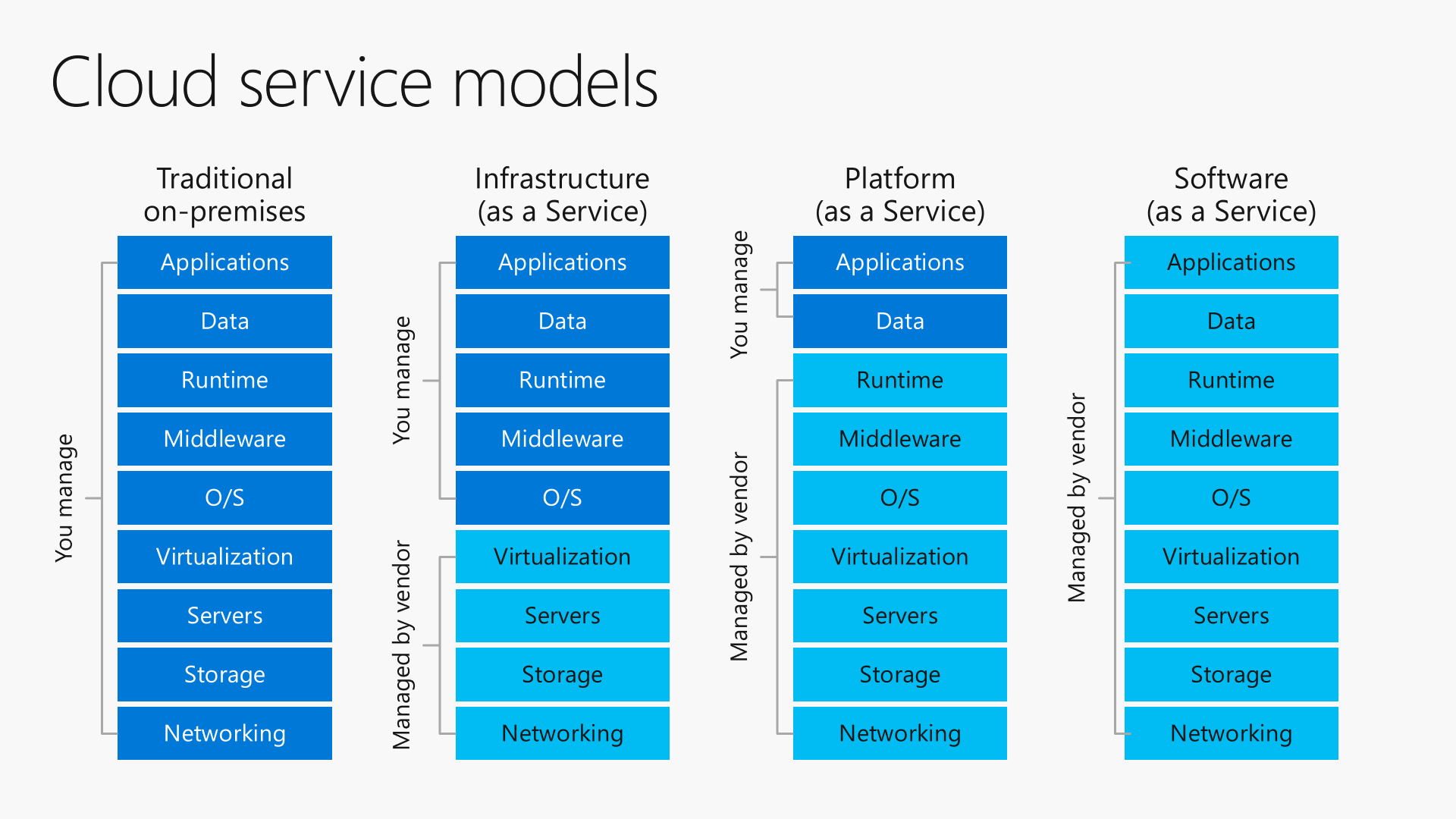
In this article , we will discuss how to leverage business with Azure IaaS (Infrastructure as a Service). We will take a comparative look between Traditional Model vs. Cloud Model.

If you have quesitons about the clous Cloud , please look over the following:

I am sure by the end of this article, we will have a sound rationale for using Cloud Services

Azure As Starting Point

As shown above , in the Traditional on-premise Service Model we have to take care of the Application, Data, Runtime, Server, Storage etc.

But we could use either IaaS, PaaS or SaaS based on individual and business usage

Pay per use

2

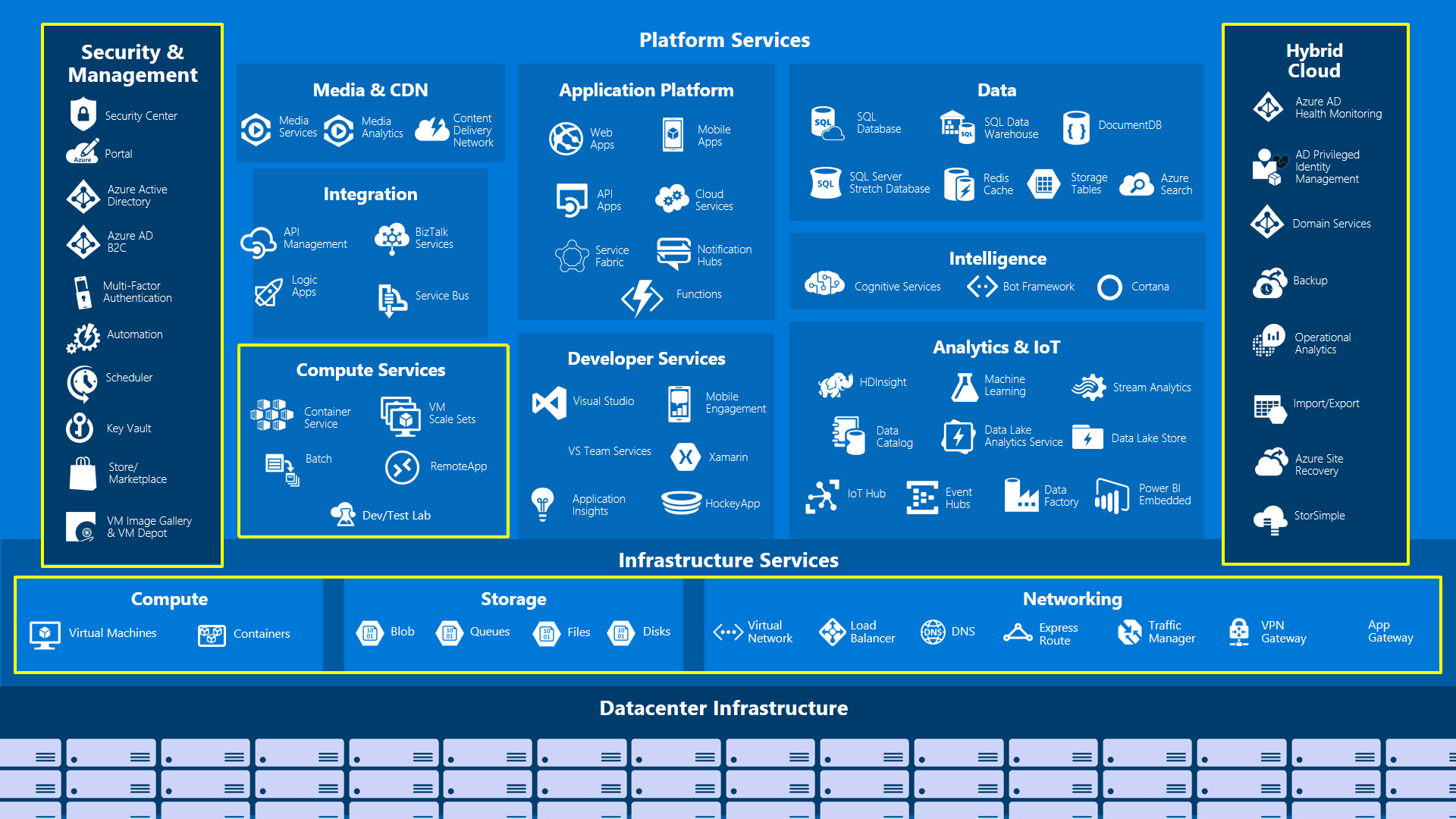
For Platform as a Service (PaaS), we can benefit from one or all of the Security & Management, Platform Services or Infrastructure Services.

Worldwide Azure Regions Availability

3

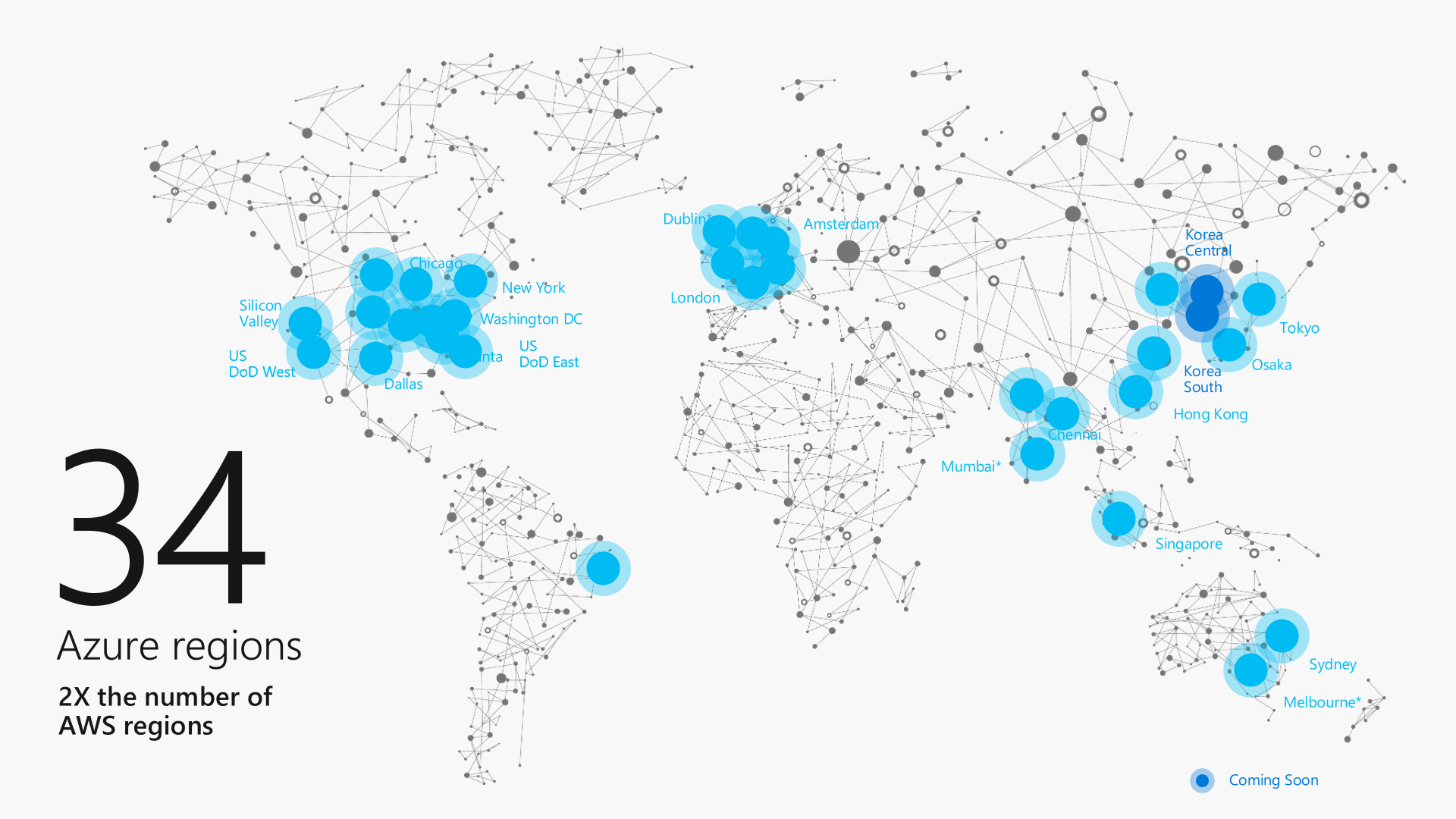
As of today, there are a total of 34 Azure regions to give support 24/7 to customers in almost every continent.

Geo Redundancy

4

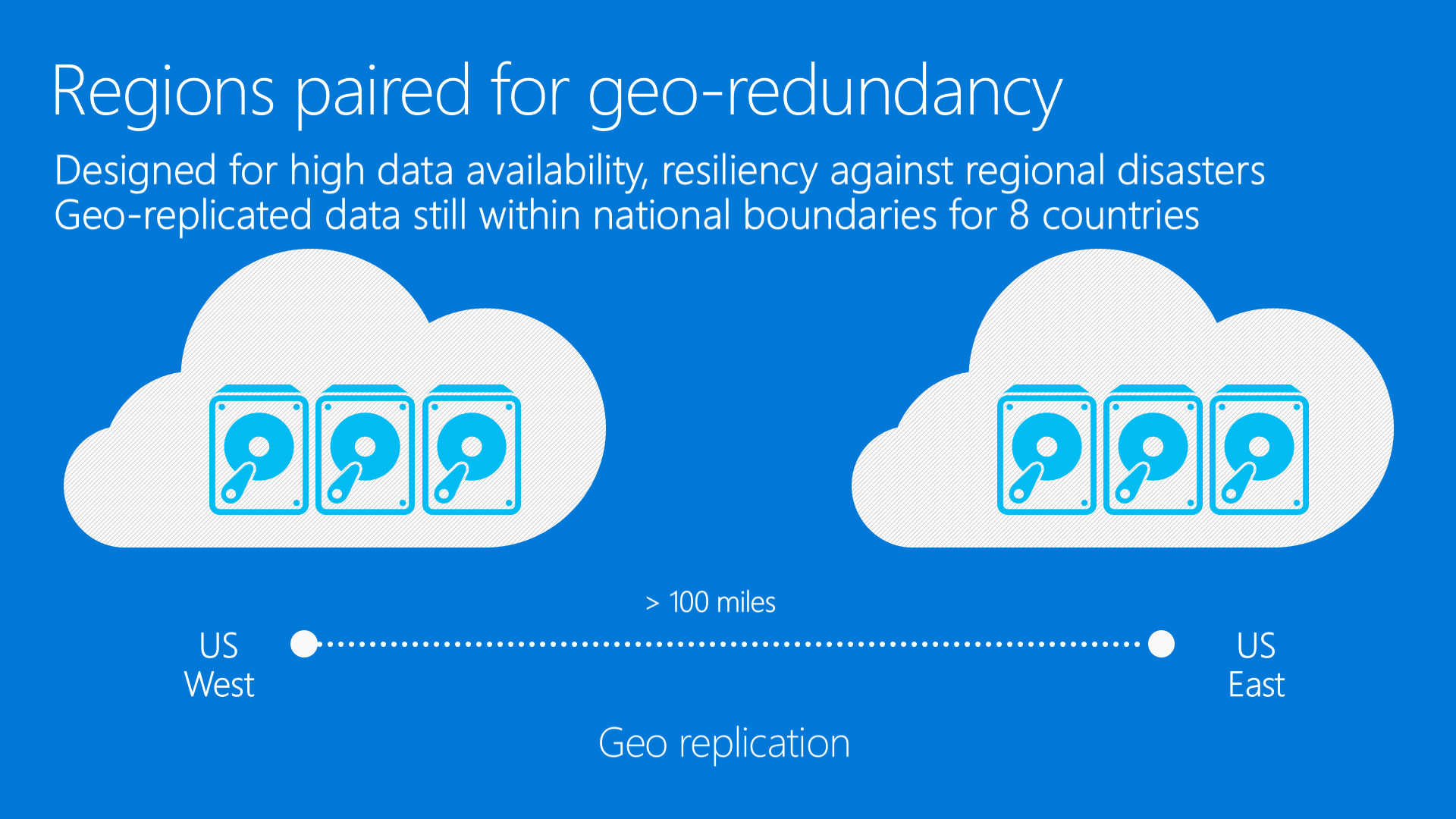
Highly promising Geo replications options are available across the globe for Disaster Recovery.

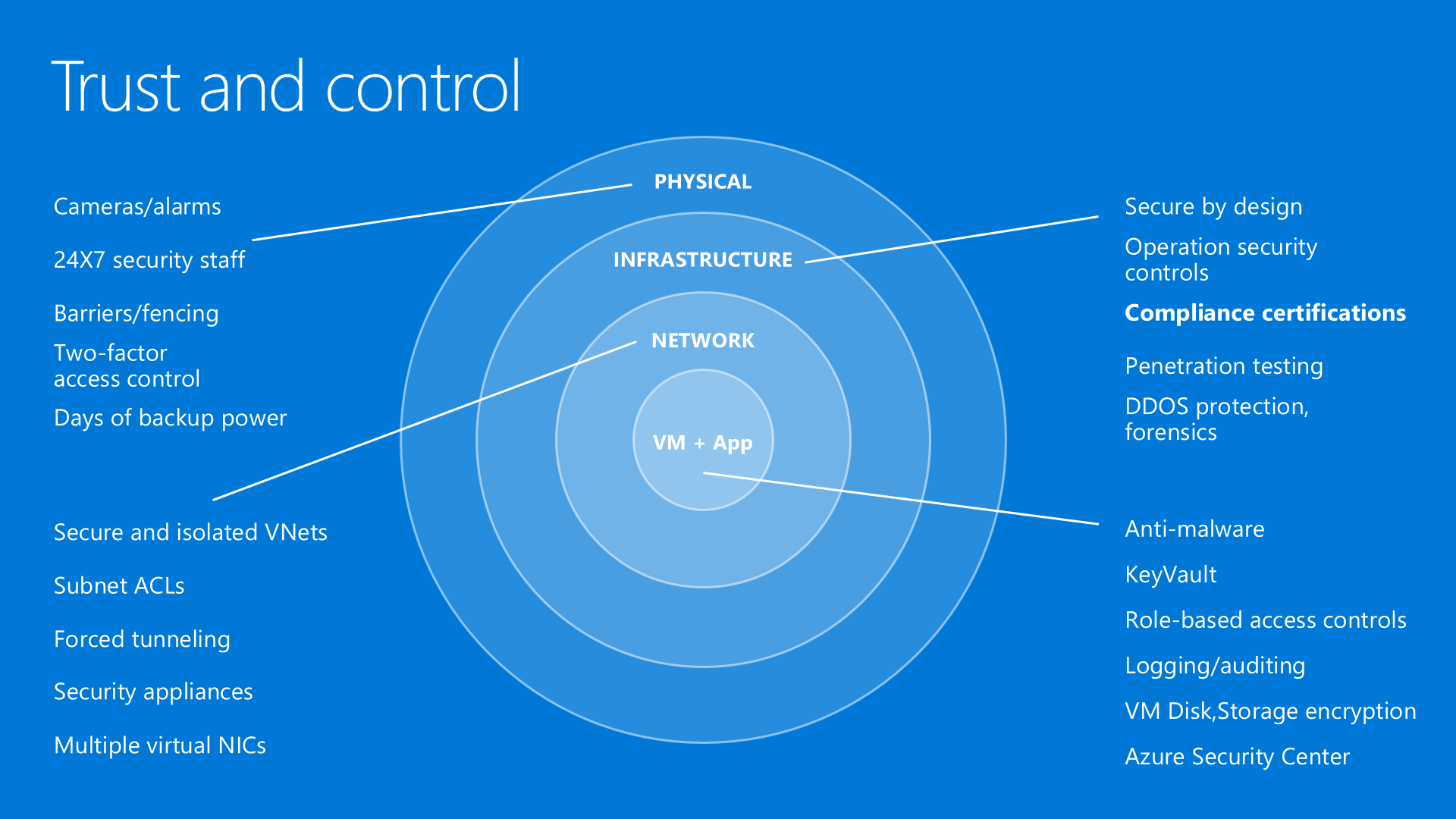
Security

It would not be wrong to say that the data is highly secure in the Cloud, owing to the Security mechanisms at the levels of:

  1. Physical
  2. Infra
  3. Network and
  4. VM

It is shown below.

5

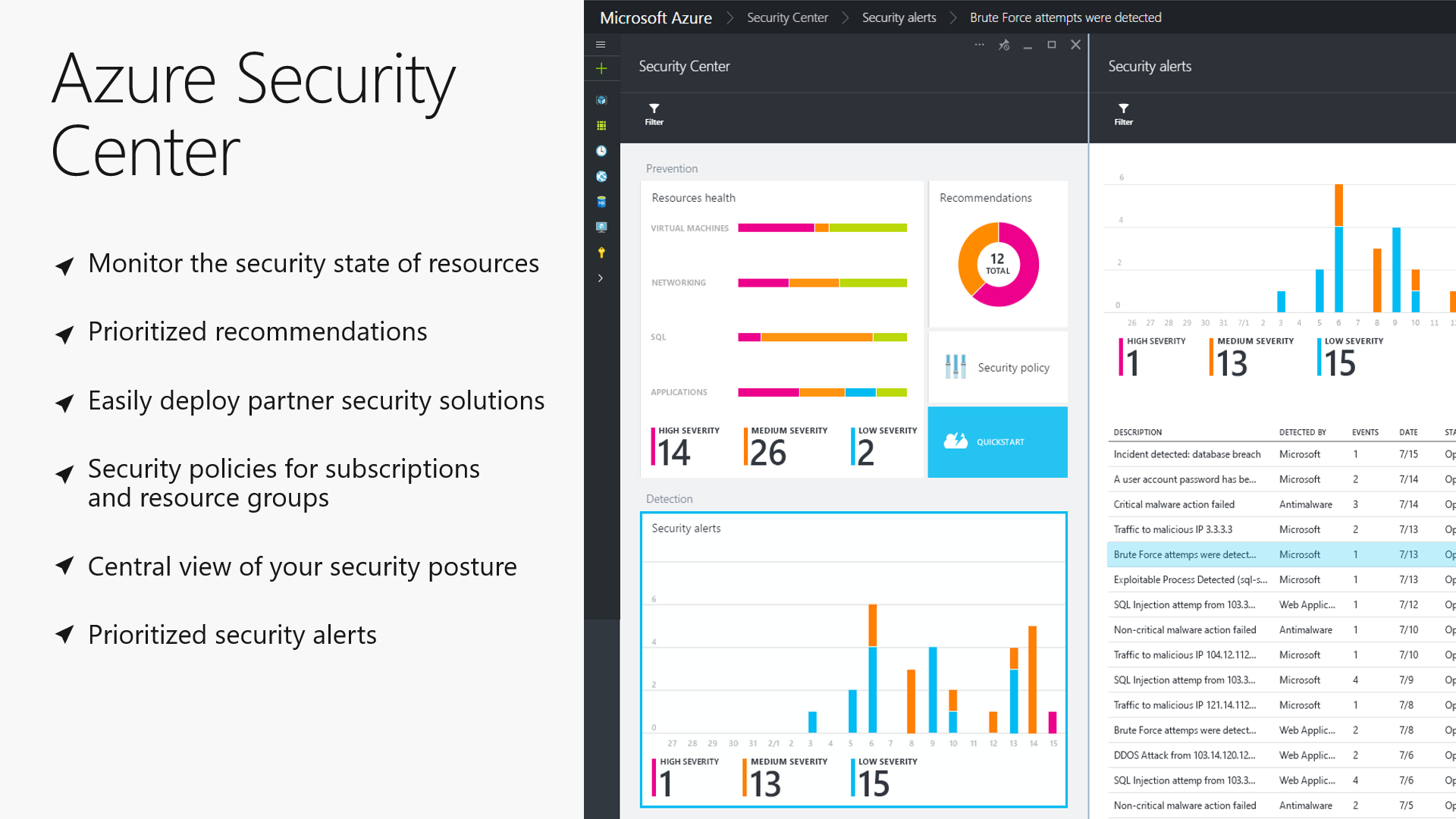
Azure Security Center

For details, please refer to this related article:

Azure Security – Solution To Digital Transformation

Azure security center is available to keep an eye out every time for Cloud Resources, as shown below.

6

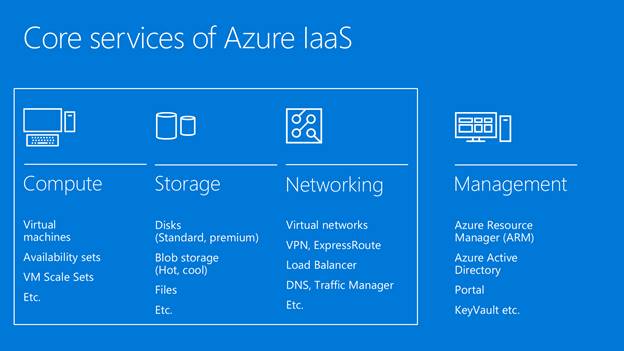
Now, let’s dive deep down into IaaS Core Services.

It’s a combination of the following

  1. Compute
  2. Storage
  3. Networking and
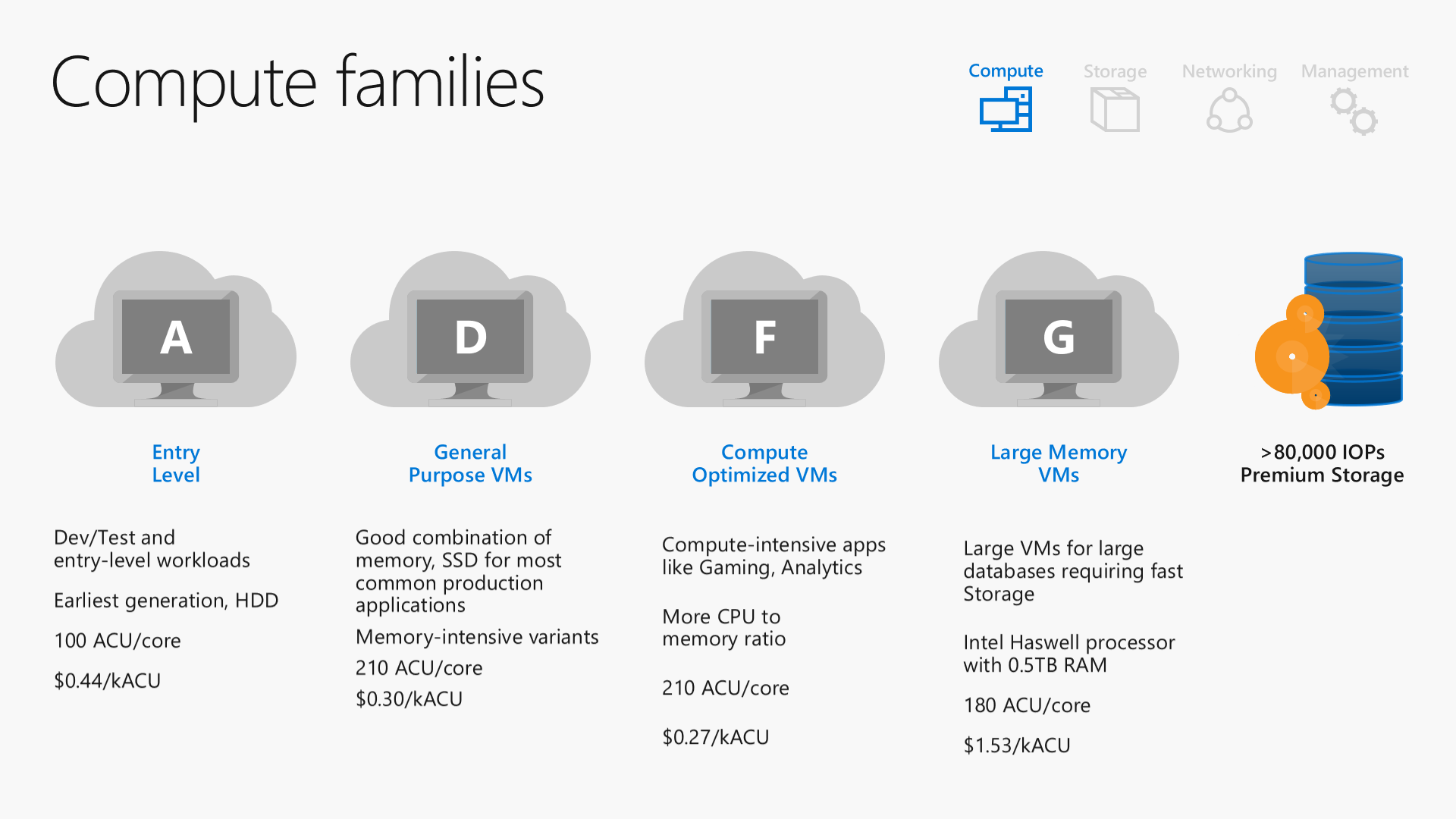
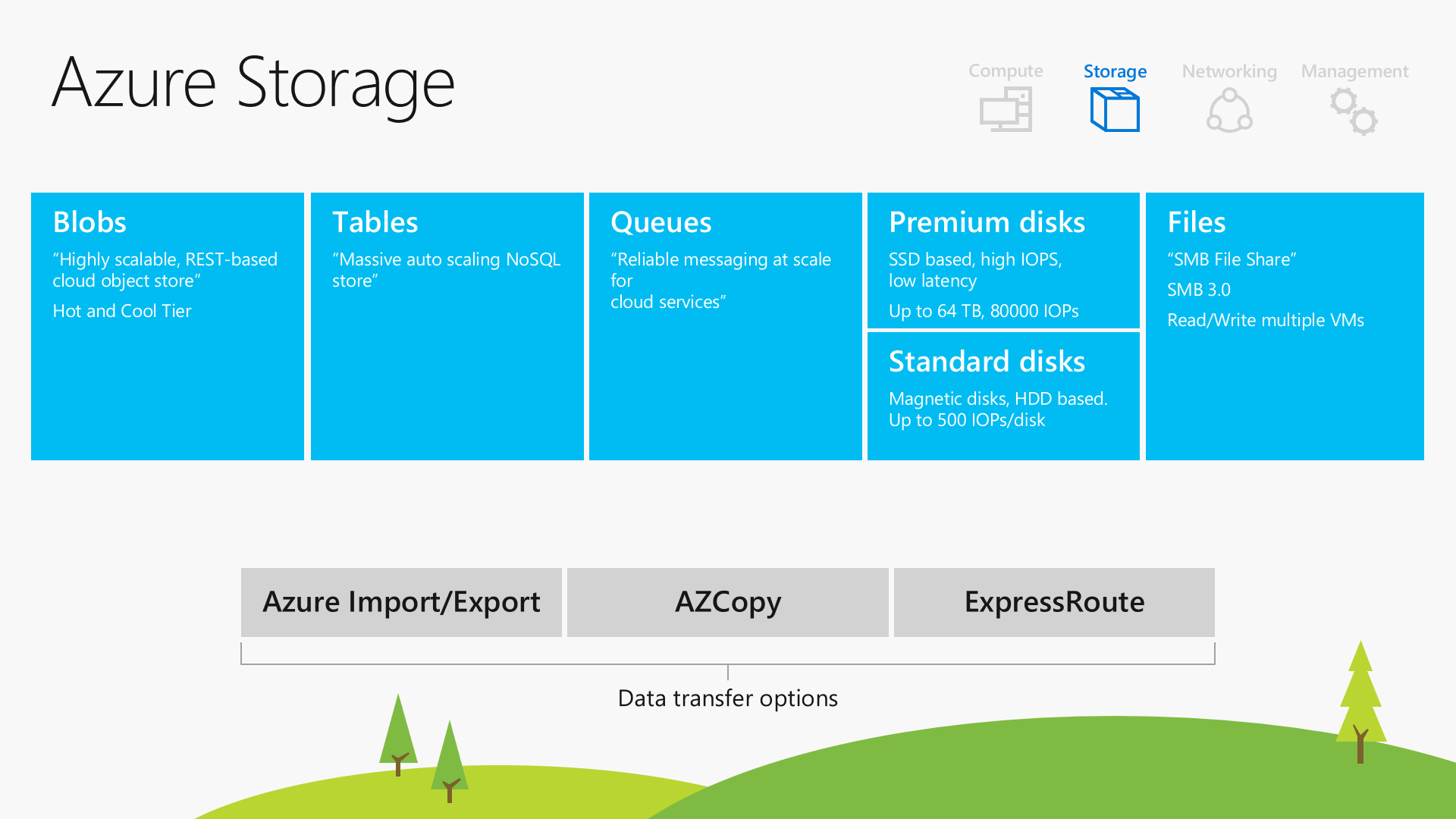
  4. Managementimage007Options for the Compute Families9.pngAzure Storage,For more details, please refer to my Azure Storage series from 1 to 7,